
Wiper Blades for Australian Weather: Why Climate Matters & How to Choose
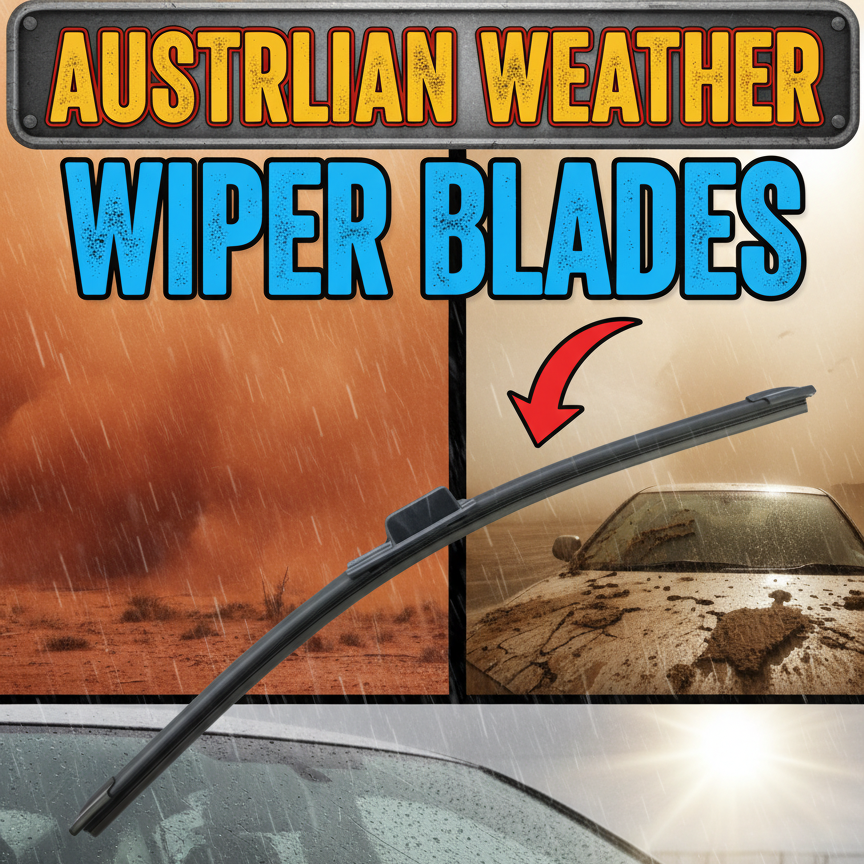
If you’ve ever wondered why your wiper blades seem to fail far earlier than the manufacturer’s promised 12-month lifespan, you’re not imagining things. The harsh reality is that most wiper blade specifications are based on US and European testing standards — climates that bear little resemblance to Australia’s unique weather challenges. Between our intense UV radiation, scorching summer heat, abrasive red dust, coastal salt spray, and the dramatic contrast between tropical downpours and bone-dry periods, Australian conditions are uniquely punishing on wiper blade rubber and components.
Understanding how your local climate affects wiper blade performance isn’t just academic knowledge — it’s the key to choosing blades that will actually last and perform when you need them most. This guide breaks down Australia’s six distinct climate zones and explains exactly what features you need for your region. UNIWIPER’s Australia-specific design philosophy addresses these precise challenges, offering wiper blades engineered for the conditions Australian drivers actually face, not the moderate European climates where most global brands conduct their testing.
Why Australian Weather is Uniquely Harsh on Wiper Blades
Challenge #1: Extreme UV Radiation
Australia holds an unwelcome world record: we experience the highest UV radiation levels globally, with UV index readings approximately 1.5 times higher than European levels. This isn’t a minor difference — it fundamentally changes how quickly wiper blade rubber deteriorates. UV radiation breaks down the molecular bonds in rubber compounds, causing hardening, cracking, and surface glazing. The problem is that virtually all major wiper blade brands formulate their rubber compounds for European or North American markets, where UV exposure is significantly lower.
The result? A wiper blade that might legitimately last 12 months in London or Seattle will be showing signs of UV damage within 3-4 months in Brisbane or Perth. This degradation happens even when your car is parked — UV damage is cumulative and doesn’t require the blades to be in use. When combined with Australia’s high ambient temperatures, which accelerate UV-related chemical breakdown, standard rubber formulas simply aren’t up to the task. The solution lies in UV-resistant rubber compounds such as graphite-treated rubber (which UNIWIPER uses as standard) or formulations with carbon black UV absorbers that can withstand our harsh conditions.
Challenge #2: Temperature Extremes
Australian summers routinely push into the 35-45°C (95-113°F) range, but these ambient temperature figures don’t tell the full story. The surface temperature of a windscreen parked in direct sunlight can reach 60-70°C (140-158°F) — hot enough to cook an egg. At these temperatures, standard rubber compounds begin to oxidise rapidly, losing their elasticity and becoming either too soft (leading to smearing) or hardening prematurely.
Temperature extremes also create thermal expansion and contraction cycles that stress the rubber and connecting components. In areas like the outback, where overnight temperatures can drop to near-freezing even after 45°C days, these thermal stress cycles accelerate dramatically. Heat-resistant synthetic rubber blends are essential for Australian conditions, maintaining their shape and flexibility across the extreme temperature ranges we experience daily.
Challenge #3: Dust and Grit
Australia’s distinctive red dust — rich in iron oxide and highly abrasive — is a unique challenge that European and American testing standards simply don’t account for. Whether you’re driving through the outback or live in suburban areas where dust storms occasionally sweep through, this fine grit acts like sandpaper on the wiper blade’s rubber edge. The damage accelerates even when the blades aren’t in active use; dust settles on the rubber and windscreen, and any slight movement grinds away at the blade’s precision edge.
This abrasive wear is particularly problematic because it affects the blade’s ability to maintain clean contact with the glass surface. Even a blade that looks visually intact can be microscopically damaged by dust, leading to streaking and poor performance. The solution requires harder, more abrasion-resistant rubber compounds and regular cleaning to remove dust buildup before it causes permanent damage.
Challenge #4: Coastal Salt Corrosion
With 85% of Australia’s population living within 50 kilometres of the coast, salt spray corrosion is a near-universal concern for Australian drivers. Traditional bracket-style wiper blades with exposed metal components are particularly vulnerable — salt accelerates rust formation on the metal frame and connection points, leading to binding, squeaking, and eventually complete failure.
Coastal drivers often find their wiper blade mechanisms seizing up well before the rubber itself wears out. This is where beam blade designs offer a substantial advantage: by minimising exposed metal components and using stainless steel or corrosion-resistant materials for essential parts, beam blades resist the salt corrosion that destroys traditional wipers in coastal environments. If you live within sight of the ocean, choosing corrosion-resistant wiper blades isn’t optional — it’s essential for reasonable longevity.
Challenge #5: Tropical Downpours (Northern Australia)
Northern Australia’s wet season brings some of the world’s most intense rainfall, with tropical downpours that can dump 300mm of rain in a single 24-hour period. These aren’t the gentle drizzles that European wipers are typically tested against — they’re wall-of-water events that demand excellent water evacuation capacity and consistent pressure distribution across the entire blade length.
Cheap or poorly designed wiper blades simply can’t keep up with this volume of water, resulting in dangerous visibility gaps, chattering, and streaking precisely when you need clear vision most. During the wet season in places like Darwin, Cairns, and Broome, your wiper blades aren’t a convenience — they’re safety-critical equipment. Aerodynamic designs with optimal pressure distribution and high-quality rubber compounds that maintain their flexibility in high-humidity conditions are non-negotiable for tropical climates.
Challenge #6: Dry Periods Between Rains
Perhaps the most insidious challenge of Australian weather is the long dry spells that characterise much of our continent. While infrequent rain might seem like it would extend wiper blade life (less wear from use), the opposite is true. During extended dry periods, especially inland, wiper blade rubber sits stationary on hot glass, exposed to relentless UV radiation and high temperatures. The rubber hardens and loses its ability to conform to the glass surface.
When that first rain finally arrives after weeks or months of dry weather, drivers discover their “like new” blades (barely used!) now smear and streak hopelessly. The hardened rubber can’t maintain even contact with the windscreen, leaving blurry streaks across your field of vision. This phenomenon is why usage-based lifespan estimates don’t work in Australia — environmental exposure matters more than how many times you’ve actually used the blades. Quality UV-resistant compounds and regular application of rubber conditioners can help, but ultimately, Australian drivers need to accept that blades require replacement based on time elapsed, not kilometres driven or uses counted.
Climate Zones: What Australian Drivers Need by Region
Australia’s vast size means climate conditions vary dramatically from region to region. What works in temperate Melbourne won’t necessarily survive Darwin’s tropical extremes. Here’s what drivers need in each of Australia’s six major climate zones.
Tropical North (Darwin, Cairns, Broome)
Climate characteristics: The tropical north experiences a dramatic wet season from November to April, bringing heavy monsoonal rainfall, followed by an intensely sunny dry season from May to October. High humidity persists year-round, and UV exposure is extreme in both seasons.
Wiper blade challenges: This region presents a quadruple threat: severe UV degradation throughout the year, the need to perform flawlessly in torrential downpours, mould and mildew concerns during the humid wet season, and significant dust buildup during the dry months. Your blades need to excel in every condition imaginable.
Recommended features: Maximum UV resistance is non-negotiable, combined with aerodynamic design for high-speed rain clearing. A hydrophobic coating helps water bead and roll away more effectively during heavy rain. Quick-drying materials prevent mould growth in the humid conditions. UNIWIPER’s tropical-tested rubber compound and aerodynamic beam design are specifically engineered for these extreme conditions, providing reliable year-round performance in Australia’s most challenging climate zone.
Arid Inland / Outback (Alice Springs, Broken Hill, Kalgoorlie)
Climate characteristics: Australia’s interior experiences extreme temperature swings ranging from near-freezing nights to 45°C+ summer days. Humidity is very low, dust storms are frequent, and when rain does arrive, it’s often heavy and sudden.
Wiper blade challenges: Thermal stress from massive day-night temperature variations puts enormous strain on rubber compounds. Constant dust and grit act as abrasives, wearing down blade edges even when not in use. The combination of extreme heat and low humidity causes rapid rubber hardening, and long periods between use mean blades sit degrading in harsh conditions without the “exercise” of regular operation.
Recommended features: Heat-resistant rubber compounds that maintain elasticity despite temperature extremes are essential. Abrasion-resistant edges survive the constant dust exposure. Sealed bearing designs prevent grit infiltration into moving parts. Dust-repellent coatings reduce buildup. UNIWIPER’s heat-stabilised rubber and sealed connector design specifically address the outback’s unique challenges, ensuring your blades work when that rare but intense storm arrives.
Temperate Southeast (Melbourne, Sydney, Canberra)
Climate characteristics: The southeast enjoys four distinct seasons with moderate UV levels (still high by global standards), variable rainfall throughout the year, and coastal salt exposure for cities like Sydney and Melbourne. Canberra and highland areas occasionally experience frost.
Wiper blade challenges: This region demands true all-season performance — your blades need to handle everything from summer heat waves to cool, rainy winters. Coastal locations add the complication of salt corrosion. UV radiation remains significant during summer months, and occasional frost in elevated areas requires rubber compounds that stay flexible at lower temperatures.
Recommended features: All-season rubber compounds that perform across a wide temperature range are crucial. Corrosion-resistant beam blade construction handles coastal environments. Good UV protection extends lifespan through hot summers. The wide temperature range requires compounds that don’t harden in winter or soften excessively in summer. UNIWIPER’s all-weather design with stainless steel components provides the versatility southeast drivers need, handling everything from coastal Sydney’s salty air to Canberra’s frosty mornings.
Coastal Queensland (Brisbane, Gold Coast, Sunshine Coast)
Climate characteristics: Queensland’s coastal region features subtropical weather with warm temperatures year-round, high humidity, regular rainfall, and the double threat of salt spray combined with intense UV exposure.
Wiper blade challenges: This region is perhaps Australia’s toughest on wiper blades because salt and UV create a compounding degradation effect — each accelerates the damage caused by the other. Frequent rain means the blades are in constant use (wear from operation), while humidity accelerates material breakdown at the molecular level. Traditional bracket-style wipers with exposed metal rust rapidly in these conditions.
Recommended features: Marine-grade materials are effectively essential for longevity in coastal Queensland. Excellent UV resistance combats the intense Queensland sun. Durability under frequent use is critical since these blades work hard year-round. Rust-proof construction, ideally through a beam blade design that minimises exposed metal, prevents the corrosion that prematurely kills standard wipers. UNIWIPER’s beam blade design eliminates rust vulnerability while the UV-resistant rubber handles Queensland’s punishing sun.
Southern Coast (Adelaide, Perth, Hobart)
Climate characteristics: The southern coast ranges from Mediterranean climates in Perth and Adelaide to temperate conditions in Hobart. Coastal winds are a constant factor, rainfall is moderate and seasonal, and while UV levels are less extreme than northern Australia, they remain significant by global standards.
Wiper blade challenges: Salt corrosion from coastal winds affects even vehicles that never drive on beach roads. Temperature variation, particularly in Hobart, requires flexible all-season performance. The need to handle both dry summers and wet winters means single-condition specialists won’t cut it.
Recommended features: Corrosion resistance remains important despite the milder climate. All-weather rubber compounds handle seasonal temperature swings. Wind-resistant aerodynamic design prevents blade lift at highway speeds, particularly relevant for Perth’s windy conditions. UNIWIPER’s balanced design performs reliably across the southern coast’s variable conditions, from Adelaide’s dry summers to Hobart’s cool, wet winters.
Inland Southeast (Regional Victoria, NSW, Southern Queensland)
Climate characteristics: This region experiences hot, dry summers and cool winters with occasional frost. UV exposure is significant in summer, and dust from agricultural areas is common. Rainfall is variable and often seasonal.
Wiper blade challenges: The combination of hot, dry summers followed by cooler, wetter winters demands true all-season capability. Agricultural dust adds an abrasive element. Long dry spells between rain events mean blades sit unused for extended periods. Winter temperatures require rubber compounds that remain flexible when cold.
Recommended features: All-season performance across a wide temperature range is essential. UV resistance extends summer lifespan. Dust resistance and easy cleaning are important for agricultural areas. Compounds that maintain flexibility down to near-freezing temperatures ensure winter performance. UNIWIPER’s versatile design handles the inland southeast’s seasonal extremes while standing up to the region’s challenging summer conditions.
UV Damage: Australia’s #1 Wiper Blade Killer
Why UV is the Silent Killer
Ultraviolet radiation doesn’t just fade your car’s paint or crack your dashboard — it’s systematically destroying your wiper blades at a molecular level. UV photons break the polymer chains that give rubber its flexibility and resilience, causing hardening, surface glazing, and eventually cracking. This process is insidious because it happens continuously whenever your car is parked in sunlight, regardless of whether you’re using the wipers or not. The damage is cumulative and irreversible, and it’s accelerated by heat, which is why Australian conditions are so particularly brutal on wiper blade rubber.
Signs of UV Damage
Learning to recognise UV damage early can help you replace blades before they fail completely at an inconvenient moment. If the rubber feels hard or rigid rather than supple when you touch it, UV degradation is already well advanced. Visible cracks along the rubber edge, even small ones, indicate the material has lost its integrity. Blades that leave streaks despite appearing visually intact often have surface hardening from UV exposure. Squeaking or chattering on clean, wet glass is another telltale sign — hardened rubber has lost the flexibility to conform smoothly to the windscreen surface.
UV Protection Technologies
Modern wiper blade technology offers several approaches to UV protection. Graphite-treated rubber, which UNIWIPER uses as standard, provides excellent UV resistance while maintaining flexibility. Carbon black UV absorbers are mixed into the rubber compound to intercept UV photons before they can damage the polymer structure. Synthetic rubber blends combine multiple materials to balance UV resistance with other performance requirements. Some premium blades also feature protective coatings that provide an additional layer of UV defence. The key is ensuring UV protection is built into the blade from manufacturing, not an aftermarket treatment that will wear off.
Extend Blade Life: UV Protection Tips
While you can’t completely prevent UV damage in Australia’s intense sun, you can slow the process. Park in shade whenever possible — even a carport provides significantly more protection than full sun exposure. Use a windscreen sun shade when parked for extended periods; it protects both your dashboard and your wiper blades. Consider lifting blades off the glass during extended parking in hot weather to prevent sun-baking the rubber against the hot windscreen surface. Apply rubber conditioner monthly to help maintain flexibility. Finally, replace blades proactively before complete failure — catching UV degradation early prevents the damage that occurs when hardened blades grind against your windscreen.
Why Standard “12-Month” Wipers Don’t Last in Australia
US/European Testing Standards
When a wiper blade manufacturer claims their product will last 12 months, they’re basing that claim on testing conducted in moderate climates — typically European or US standards. These testing environments feature lower UV exposure, more frequent rainfall (which keeps rubber supple through regular use), cooler average temperatures, and less extreme temperature swings between day and night or season to season. It’s not that the manufacturers are lying; it’s that their testing doesn’t reflect Australian reality.
Australian Reality
In actual Australian conditions, 6-9 months is a realistic lifespan expectation for quality wiper blades. Budget blades typically last 3-6 months before performance degradation becomes unacceptable. If your car is parked in full sun daily, subtract a few months from these estimates. Lifespan also varies significantly by region — tropical north and coastal Queensland drivers should expect to replace blades more frequently than temperate southern drivers. The key is adjusting your expectations based on where you actually drive, not the marketing claims based on European testing.
The True Cost Calculation
When comparing budget versus premium wiper blades, the monthly cost calculation often surprises people. Premium blades at $60 per pair lasting 9 months cost $6.67 per month of use. Cheap blades at $20 per pair lasting only 3 months also cost $6.67 per month. The monthly cost is identical, but the premium blades provide superior performance throughout their life — better water clearing, quieter operation, more consistent pressure — while cheap blades start degrading almost immediately. You’re paying the same either way; the question is whether you want good performance or poor performance for your money. For detailed cost comparisons and specific product recommendations, see our Best Wiper Blades Australia 2026 guide.
Australian-Specific Features to Look For
✅ UV-Resistant Rubber Compounds
This is the single most important feature for Australian conditions. Look for blades with graphite treatment, UV inhibitors explicitly mentioned on packaging, or synthetic rubber blends designed for high UV exposure. UV resistance should be a standard feature, not a premium add-on. UNIWIPER includes UV-resistant rubber as standard across all models because it’s simply non-negotiable in Australia’s intense sun. If the packaging doesn’t specifically mention UV resistance, assume the blades are formulated for moderate climates and will fail prematurely here.
✅ Heat-Stable Materials
Rubber compounds must maintain their shape and flexibility at temperatures above 45°C without softening excessively or hardening when cooled. Synthetic rubber blends typically outperform pure natural rubber in heat stability. This is particularly critical for inland and northern Australia, where summer temperatures routinely push into extremes that standard rubber compounds simply can’t handle. Heat stability also contributes to longevity — rubber that doesn’t degrade rapidly in heat will survive more Australian summers.
✅ Corrosion-Resistant Construction
For Australia’s predominantly coastal population, corrosion resistance is essential for blade longevity. Stainless steel components resist rust formation even in salt spray environments. Beam blade designs minimise exposed metal, eliminating the primary rust failure points of traditional bracket wipers. Rust-proof connectors and pivot points ensure smooth operation throughout the blade’s life. If you live within 50 kilometres of the coast — which includes most Australian cities — don’t compromise on corrosion resistance.
✅ Aerodynamic Design
Australian highway driving at 100-110 km/h generates significant wind force on wiper blades. Poorly designed blades can lift off the windscreen at highway speeds, creating dangerous visibility gaps. Aerodynamic beam blade designs use wind force to actually increase downward pressure, improving contact with the glass. This is particularly important for rural and outback driving, where highway speeds are maintained for long distances and encountering sudden rain is common.
✅ Dust-Resistant Design
In Australia’s dusty conditions, wiper blade design details matter. Sealed pivot points prevent grit infiltration that can cause binding and accelerated wear. Smooth surfaces accumulate less dust than complex geometries. Easy-to-clean designs mean you’ll actually maintain them properly. Consider how accessible the blade surface is for quick cleaning — a blade you can wipe down in 30 seconds will receive more maintenance than one requiring disassembly.
Maintenance Tips for Australian Conditions
Monthly: Clean Your Blades
This simple 2-minute task can extend blade life by several months. Wipe the rubber edge with a damp cloth to remove accumulated dust, dead insects, and residue. Use mild soap if needed for stubborn grime. This prevents the abrasive action of dirt grinding between the rubber and glass, which accelerates wear dramatically. Think of it as preventative maintenance that costs nothing but saves you from premature replacement.
Weekly: Check for Damage
A quick visual inspection during your weekly car care routine catches problems before they become failures. Look for visible cracks in the rubber edge. Feel whether the rubber still has suppleness or has hardened. Check that the blade sits evenly against the glass along its entire length. Early detection means you can replace a degraded blade before it fails during that unexpected storm, rather than discovering the problem when you need visibility most.
After Dust Storms: Immediate Cleaning
Australian dust storms deposit a layer of abrasive grit on everything, including your windscreen and wiper blades. Never use your wipers on a dusty windscreen — you’ll instantly scratch the glass and damage the blades. Instead, spray washer fluid liberally first to lubricate the surface, then clean the windscreen properly. Remove dust from the wiper blades themselves before using them. This simple discipline prevents the damage that occurs when dust acts as grinding compound between rubber and glass.
Summer: Protect from Sun
During Australia’s intense summer months, take extra UV protection measures. Park in shade when possible — even partial shade significantly reduces UV exposure. Use a windscreen sun shade whenever you park outdoors for extended periods. Consider lifting wiper blades off the glass surface when parking for days or weeks in hot weather, preventing the rubber from baking against the superheated windscreen. These simple steps dramatically slow UV degradation during the season when it’s most aggressive.
After Long Non-Use: Test Before Driving
If your car has been parked for weeks or months (holiday car, second vehicle, etc.), don’t assume the wiper blades are still functional just because they weren’t used. Spray washer fluid liberally to lubricate the system. Test the blades at low speed initially to check performance. If they’ve hardened from prolonged UV exposure and heat, replace them before driving in conditions where you’ll need them. Testing when it’s not raining is far safer than discovering failure during a sudden storm.
Why UNIWIPER is Designed for Australian Conditions
Australian-Developed Formula
Unlike international brands that adapt existing European designs for the Australian market as an afterthought, UNIWIPER’s development process started with Australian conditions as the baseline requirement. The rubber compound was tested extensively under Queensland’s intense UV radiation, refined to handle the abrasive red dust of the outback, and validated in tropical downpours across northern Australia. This Australia-first approach means every design decision prioritises the conditions Australian drivers actually face, rather than treating our climate as an edge case.
UV Protection Standard (Not Optional)
UNIWIPER doesn’t offer UV resistance as a premium upgrade or expensive option — it’s standard equipment on every model. The graphite-treated rubber compound is specifically formulated for Australian UV levels, not European sun exposure. This design philosophy reflects the reality that UV protection in Australia isn’t a nice-to-have feature; it’s fundamental to acceptable blade lifespan. While international brands often charge premium prices for UV-resistant variants, UNIWIPER recognises that in Australia, a blade without UV protection is simply not fit for purpose.
Beam Blade Design
UNIWIPER’s beam blade construction eliminates the exposed metal framework of traditional bracket-style wipers, providing multiple Australian-specific advantages. With no exposed metal components, coastal corrosion becomes a non-issue — critical for the 85% of Australians living near the coast. The single-piece design distributes pressure evenly across the entire blade length, improving performance on the curved windscreens found in modern vehicles. The aerodynamic profile actually uses wind force to enhance windscreen contact at Australian highway speeds, rather than lifting off the glass like inferior designs.
All-Climate Testing
UNIWIPER blades undergo real-world testing across all Australian climate zones before release. They’re validated in tropical Darwin’s wet season downpours, the scorching heat of the outback, Melbourne’s seasonal temperature swings, and Perth’s coastal conditions. This comprehensive testing ensures reliable performance across the full range of Australian weather, from 0°C winter mornings in regional areas to 50°C summer heat in the interior. International brands simply don’t have Australian test facilities conducting this level of validation in local conditions.
Real Australian Lifespans
UNIWIPER doesn’t promise unrealistic 12-month lifespans based on European testing. Instead, we’re honest about Australian conditions: expect 9-12 months in moderate climates with good UV protection habits, less in extreme conditions or with full sun exposure. This realistic approach means customers can plan replacement schedules based on actual performance, not inflated marketing claims. We’d rather under-promise and over-deliver than leave customers frustrated when their “12-month” blades fail at 4 months. Australian conditions are harsh; your wiper blade supplier should be honest about what that means for lifespan expectations.
Frequently Asked Questions
Why do my wiper blades only last 3-4 months in Australia?
Short blade lifespan is typically due to the combination of Australia’s extreme UV radiation and high temperatures accelerating rubber degradation. If you’re parking in full sun and using budget blades without UV-resistant compounds, 3-4 months is unfortunately normal. Upgrade to UV-resistant blades like UNIWIPER, park in shade when possible, and perform monthly cleaning to extend lifespan to 9-12 months.
Are UV-resistant wiper blades worth the extra cost?
Absolutely, particularly in Australia. UV-resistant blades typically last 2-3 times longer than standard blades in our conditions, meaning the cost per month is actually lower despite higher upfront prices. More importantly, they maintain performance throughout their life rather than degrading rapidly. In Australia’s intense sun, UV resistance isn’t a luxury feature — it’s essential for reasonable blade longevity and consistent performance.
Which Australian climate zone is hardest on wiper blades?
Coastal Queensland (Brisbane, Gold Coast, Sunshine Coast) is arguably the most challenging due to the double threat of intense UV combined with salt spray. Tropical North (Darwin, Cairns, Broome) is a close second due to extreme UV and the demanding performance requirements of monsoonal downpours. However, every Australian climate zone is harsher on wiper blades than the moderate European and US climates where most blades are designed and tested.
Can I extend wiper blade life with maintenance?
Yes, significantly. Monthly cleaning to remove abrasive dust, parking in shade when possible, using windscreen sun shades, and applying rubber conditioner can extend blade life by 3-4 months. However, maintenance can only slow degradation, not prevent it. Even perfectly maintained blades will eventually succumb to UV damage and heat in Australian conditions. Think of maintenance as maximising the lifespan of quality blades, not as making cheap blades acceptable.
Do I need different blades for northern vs southern Australia?
While all Australian regions require UV resistance and heat tolerance, northern drivers should prioritise maximum UV resistance and tropical downpour performance, while southern drivers can focus more on all-season versatility and corrosion resistance. Coastal drivers everywhere need rust-proof construction. UNIWIPER’s design handles all regions well, but if you’re choosing between blade types, match the features to your specific climate challenges.
How do I know if my blades have UV damage?
Key indicators include: rubber feeling hard or rigid rather than supple; visible surface cracks; streaking despite cleaning; squeaking or chattering on clean, wet glass; and the blades leaving patches of water rather than clearing smoothly. If you’ve had the blades for 4-6 months and they’re parked in sun regularly, assume UV damage is occurring even if not yet visible. Replace proactively rather than waiting for complete failure.
Related Guides for Australian Drivers
For more detailed information on choosing and maintaining wiper blades in Australian conditions, explore these related resources:
- Best Wiper Blades Australia 2026 — Product reviews and comparisons specifically tested in Australian conditions
- How to Choose Wiper Blades — Complete selection guide with climate-specific considerations
- How Often to Replace Wiper Blades in Australia — Realistic replacement schedules by region and usage
- Common Wiper Blade Problems and Solutions — Troubleshooting guide including UV damage diagnostics
Conclusion: Choose Blades Made for Where You Drive
Australian weather conditions are uniquely challenging for wiper blades, combining the world’s highest UV radiation with temperature extremes, abrasive dust, coastal salt spray, and dramatic contrasts between tropical downpours and extended dry periods. Standard wiper blade recommendations based on US and European testing simply don’t apply to our conditions — the climate assumptions are fundamentally different.
Understanding your specific climate zone and choosing wiper blades designed for Australian conditions isn’t just about getting better value for money (though premium blades do cost less per month than constantly replacing cheap ones). It’s about safety and reliability when you need clear visibility most. Whether you’re navigating Melbourne’s variable seasons, Darwin’s monsoonal downpours, or Perth’s coastal conditions, selecting blades engineered for your actual environment means the difference between wipers that work when you need them and blades that fail at the worst possible moment.
UNIWIPER’s Australia-first design philosophy means every blade is engineered for the conditions Australian drivers actually face. From UV-resistant rubber compounds tested in Queensland’s intense sun to corrosion-resistant beam blade construction for coastal environments, to heat-stable materials that maintain performance in outback extremes, UNIWIPER doesn’t adapt European designs for Australia — we start with Australian conditions as the baseline requirement. When you’re choosing wiper blades, don’t settle for products designed for someone else’s climate. Choose blades built for where you actually drive.
