
How to Choose Wiper Blades for Your Car: The Complete Australian Guide
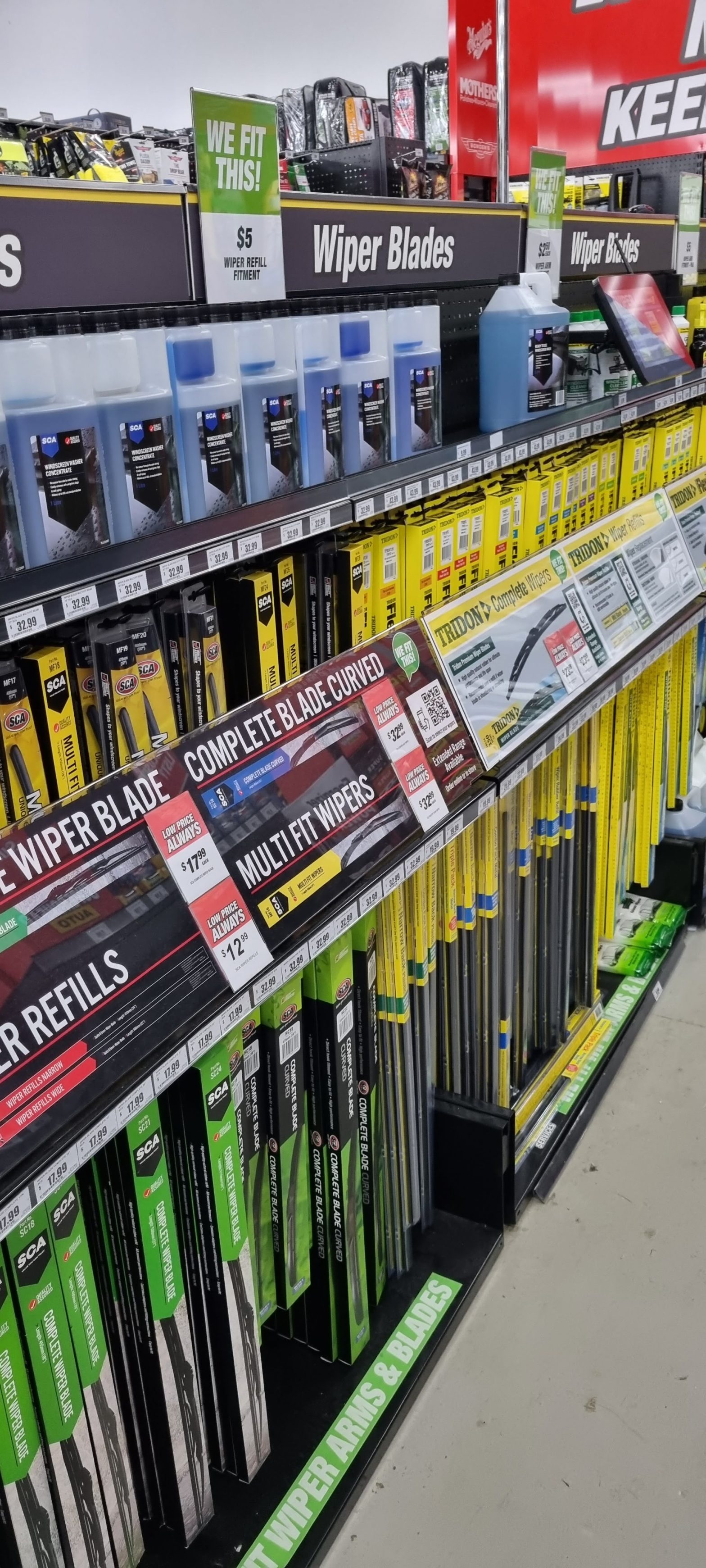
Choosing the right wiper blades shouldn’t feel like navigating a maze. Yet most Australian drivers face this exact confusion when standing in front of an auto parts wall, staring at dozens of options with cryptic size codes and vague quality claims.
Here’s what makes this decision critical: Your wiper blades are the only thing between you and a blurred windscreen during a sudden Sydney downpour or a dust storm in the outback. The wrong choice means compromised visibility, premature failure, and wasted money. The right choice means clear vision, long-lasting performance, and peace of mind.
Most Australian drivers make three common mistakes: buying the wrong size because “it looks close enough,” choosing ultra-cheap blades that fail within months under our harsh UV conditions, or defaulting to expensive dealer-supplied options without understanding if they’re actually better.
This guide cuts through the confusion. By the time you finish reading, you’ll know exactly what to buy for your vehicle, your budget, and your driving conditions. No guesswork, no regret purchases—just a clear path to the right wiper blades for your car.
The 5-Step Wiper Blade Selection Framework
Follow these five steps in order, and you’ll have your answer in under five minutes. Skip a step, and you risk buying blades that don’t fit, don’t last, or don’t perform.
Step 1: Find Your Correct Wiper Blade Size
Size is the most critical factor. Buy the wrong size by even 25mm, and your blades will either miss sections of your windscreen or collide with each other mid-wipe. Neither is acceptable.
Here are three ways to find your correct size:
Method 1: Check Your Owner’s Manual
Your vehicle’s manual lists the exact wiper blade sizes in the specifications section. Look for “wiper blade length” or “windscreen wiper specifications.” This is the most reliable method because it comes straight from the manufacturer.
Method 2: Measure Your Existing Blades
Lift your wiper arm away from the windscreen and measure the rubber blade from end to end (not including the arm). Use a tape measure and round to the nearest inch or centimeter. Make sure you measure the blade itself, not the entire wiper arm assembly.
Method 3: Use an Online Size Finder Tool
Most quality wiper blade retailers offer a vehicle lookup tool where you enter your year, make, and model. The tool returns your exact sizes instantly. This is the fastest method if you don’t have your manual handy.
Critical reminder: Your driver-side and passenger-side blades are often different sizes. A typical Australian sedan might use a 24-inch (610mm) driver blade and a 16-inch (400mm) passenger blade. Always confirm both sizes.
Don’t forget the rear wiper: If your vehicle has a rear wiper (common on SUVs, hatchbacks, and wagons), you’ll need that size too. Rear wipers typically range from 10 to 16 inches.
Quick reference for common Australian vehicles:
- Toyota Corolla (2014-2019): 26″ + 16″
- Mazda3 (2014-2019): 26″ + 16″
- Toyota RAV4 (2013-2018): 26″ + 16″ + 12″ rear
- Ford Ranger (2012+): 22″ + 22″
- Holden Commodore VF: 24″ + 19″
- Hyundai i30 (2017+): 26″ + 14″
For a comprehensive database covering hundreds of vehicles, check our wiper blade size guide by vehicle.
Step 2: Choose Your Wiper Blade Type
Once you know your size, you need to choose between three main wiper blade types. Each has distinct advantages, and your choice depends on your vehicle age, budget, and performance needs.
Beam Blades (Recommended for Most Australian Drivers)
Beam blades feature a single, continuous piece of rubber wrapped in a protective shell. There are no exposed metal frames, joints, or hinges.
Advantages:
- Superior UV resistance—critical in Australia where sun exposure is extreme
- More uniform pressure distribution across the entire blade
- Better performance at highway speeds (less wind lift)
- Longer lifespan in harsh conditions (typically 12+ months)
- Modern, sleek appearance
Disadvantages:
- Higher upfront cost (typically $30-60 per pair)
Best for: Modern vehicles (post-2010), drivers who want maximum durability, anyone living in high-UV regions (northern Australia, coastal areas).
Conventional Blades (Traditional Budget Option)
Conventional blades use a metal frame with multiple pressure points and a rubber insert. This is the original wiper blade design that’s been around for decades.
Advantages:
- Lower upfront cost (typically $15-30 per pair)
- Adequate performance for older vehicles
- Widely available
Disadvantages:
- Exposed metal corrodes faster in coastal areas
- Shorter lifespan in Australian heat (typically 6-9 months)
- Less effective on modern curved windscreens
- More wind lift at highway speeds
Best for: Older vehicles (pre-2010) with flat windscreens, drivers on extremely tight budgets, vehicles driven infrequently.
Hybrid Blades (The Middle Ground)
Hybrid blades combine a beam blade’s aerodynamic shell with a conventional blade’s internal frame structure. They attempt to deliver the best of both worlds.
When to consider them: Hybrid blades work well in extreme weather conditions (heavy snow regions, which isn’t common in Australia) or for drivers who want beam blade performance with slightly easier installation. For most Australian drivers, however, full beam blades offer better value.
Which should you choose?
- If you drive a car built after 2010 → Beam blades
- If you live in northern Australia, Queensland, or coastal areas → Beam blades
- If you want maximum durability → Beam blades
- If you drive an older car (pre-2010) and budget is tight → Conventional blades
For a detailed side-by-side comparison with performance data, read our beam vs conventional wiper blades guide.
Step 3: Consider Your Climate and Driving Conditions
Australia’s climate varies dramatically from region to region, and your wiper blades need to match your local conditions.
Northern Australia (Tropical, High UV Exposure)
Darwin, Cairns, and northern Queensland experience intense UV exposure year-round and seasonal monsoons. Your wiper blades face two challenges: UV degradation that causes rubber to crack and harden, and sudden heavy rain that demands instant performance.
What you need: UV-resistant rubber compounds with graphite or silicone coating. Beam blades significantly outperform conventional blades in these conditions because they have no exposed metal to corrode during the wet season.
Expected replacement cycle: 6-9 months, even with quality blades. The UV exposure is simply too intense.
UNIWIPER advantage: Our blades feature dual-layer UV protection specifically engineered for Australian conditions, not just adapted from Northern Hemisphere products.
Southern Australia (Temperate, Varied Conditions)
Melbourne, Sydney, Adelaide, and southern regions face a different challenge: variable weather. You need blades that perform in cold morning frost, afternoon heat, sudden rain, and everything in between.
What you need: All-weather rubber compounds that stay flexible across temperature ranges, and reliable streak-free performance. The full spectrum of conditions means you can’t optimize for just one.
Expected replacement cycle: 9-12 months with quality blades.
Coastal Areas (Salt Corrosion Risk)
Living within 10km of the ocean? Salt spray accelerates corrosion on any exposed metal components. This is where conventional blades fail fastest.
What you need: Beam blades with stainless steel internal components and fully enclosed designs. No exposed metal means nothing for salt to attack.
Outback and Rural Areas (Dust and Debris)
Red dust is abrasive. Every time you use your wipers to clear dust from your windscreen (which you shouldn’t do dry, but everyone does), you wear down the rubber.
What you need: Durable rubber compounds that resist abrasion, and designs that are easy to clean. Beam blades with smooth exteriors are easier to wipe clean than conventional blades with their multiple joints and hinges.
City Driving (Frequent Use, Traffic)
Stop-and-go traffic means frequent wiper use during rain. You need blades that operate quietly (no chattering at low speeds) and last despite high cycle counts.
What you need: Quality rubber with consistent friction characteristics and longevity. The cost-per-use calculation favors mid-range blades that last longer.
Step 4: Set Your Budget (and Understand the Trade-offs)
Wiper blades fall into three price tiers. Here’s what you actually get at each level, and why the middle tier usually wins.
Budget Tier ($15-30 per pair)
What you get: Basic rubber compounds, conventional frame designs (usually), minimal UV protection, short warranties (if any).
What you sacrifice: Lifespan (expect 4-6 months in Australian conditions), performance consistency (they deteriorate faster), and often customer support.
Replacement frequency: 2-3 times per year in typical Australian conditions.
Best for: Vehicles you plan to sell soon, cars driven less than 5,000km per year, or temporary solutions when cash is genuinely tight.
Mid-Range Tier ($30-60 per pair) ← UNIWIPER Sits Here
What you get: UV-resistant rubber compounds, beam blade technology, universal adapter kits, 12-month performance expectations, proper warranties, and Australian-based customer support.
The value equation: These blades last 9-12 months instead of 4-6 months. Over a year, you buy once instead of twice or three times. The cost per month is actually lower than budget blades.
Example calculation:
- Budget blades: $20 × 3 replacements = $60/year
- Mid-range blades: $45 × 1 replacement = $45/year
You save $15 per year AND avoid two extra installation AND you will appreciate easy installation.
Best for: 90%+ of Australian drivers. This is the sweet spot where performance, durability, and price intersect.
Premium Tier ($60-100+ per pair)
What you get: Top-tier rubber compounds, advanced coatings (water-repellent treatments), premium brand names, extended warranties.
The reality: Marginal performance gains for a significant cost increase. A $80 premium blade might last 2-3 months longer than a $45 mid-range blade, but you’re paying nearly double.
Best for: Luxury vehicles where brand matching matters to you, car enthusiasts who want the absolute best regardless of cost, or specific performance vehicles with unusual requirements.
For most Australian drivers: The jump from budget to mid-range delivers massive improvements. The jump from mid-range to premium delivers minimal improvements at high cost. That’s why UNIWIPER targets the mid-range sweet spot—it’s where value lives.
Step 5: Check Compatibility and Fitment
You’ve found your size, chosen your type, and set your budget. The final step is confirming your wiper arm attachment type. Get this wrong, and your perfectly-sized blades won’t attach to your vehicle.
Common wiper arm attachment types in Australia:
Hook/J-Hook (Most Common)
The traditional hook-shaped connector. Found on most vehicles built before 2010 and many newer models. The blade slides onto a J-shaped arm and clips into place.
Pin Arm
A small pin extends from the wiper arm, and the blade locks onto it. Common on European vehicles.
Bayonet
A side-mounted connector with a twist-lock mechanism. Found on many French vehicles (Peugeot, Renault, Citroën).
Side Pin
A pin mounted on the side of the arm rather than the end. Less common in Australia but found on some Asian imports.
Push Button
A button-release mechanism on the blade connector. Increasingly common on modern vehicles (post-2015).
How to identify your attachment type: Lift your wiper arm away from the windscreen and look at where the blade connects to the arm. Take a photo if you’re unsure—most retailers can identify the type from a clear photo.
Universal adapters vs specific fitments: Quality wiper blades include multiple adapter pieces that fit 95%+ of vehicles. You select the right adapter for your vehicle’s attachment type during installation. This is far better than buying attachment-specific blades, which limit your options.
Why UNIWIPER solves this problem: Every UNIWIPER blade set includes a universal adapter kit with six different attachment types. Instructions clearly show which adapter matches your vehicle. This eliminates the compatibility guesswork entirely.
Key Features to Look For in Quality Wiper Blades
Beyond the basics of size and type, certain features separate good wiper blades from mediocre ones. Here’s what actually matters.
Rubber Quality and Coating
The rubber compound determines how long your blades last and how well they perform. Look for natural rubber with synthetic additives for flexibility, or premium synthetic compounds that resist UV degradation.
Graphite coating: A thin graphite layer on the rubber reduces friction and prevents chattering. This coating wears off over time, which is one reason blades deteriorate. Quality blades incorporate graphite throughout the rubber, not just as a surface treatment.
UV protection treatments: In Australia, this is non-negotiable. UV exposure causes rubber to crack, harden, and lose flexibility. Blades without UV protection fail within months of Australian sun exposure.
How to spot quality rubber: It should feel smooth but slightly tacky to the touch, not hard or shiny. Cheap rubber feels slippery and rigid.
Aerodynamic Design
At highway speeds (100+ km/h), wind force can lift wiper blades away from the windscreen, reducing contact pressure and causing streaks. Aerodynamic designs counteract this lift.
Beam blades excel here because their low-profile design naturally deflects wind. Conventional blades rely on their own weight and spring tension, which becomes inadequate at high speeds.
Why this matters for Australian driving: Long-distance highway driving is common in Australia. If you regularly drive between cities or take road trips, aerodynamic performance is essential. Blades that lift at 110 km/h aren’t just annoying—they’re dangerous when rain hits.
Corrosion Resistance
Any exposed metal component will corrode over time, especially in coastal areas. Quality wiper blades use:
- Stainless steel springs and internal components
- Protective coatings on any exposed metal
- Frame-free designs (beam blades) that eliminate exposed metal entirely
Conventional blades with painted metal frames look fine when new but rust quickly. Once rust starts, the frame binds and loses flexibility. Your wipers begin chattering, streaking, and leaving sections unwiped.
Easy Installation
You shouldn’t need tools or a mechanic to install wiper blades. Look for:
- Tool-free installation systems
- Clear visual instructions (bonus if they’re included in the package)
- Universal adapters included in the box
- Quick-release mechanisms that work without excessive force
UNIWIPER’s plug-and-play system is designed for anyone to install in under five minutes, with no tools and no stress. If you can operate a door handle, you can install UNIWIPER blades.
Warranty and Support
A proper warranty indicates manufacturer confidence in their product. Quality wiper blades come with at least a 6-12 month warranty covering defects and premature wear.
What matters more than warranty length: Can you actually reach someone if there’s a problem? International brands often have no Australian presence. You’re left emailing generic support addresses and hoping for a response.
Australian-based customer support means real people who understand our conditions, respond quickly, and can replace faulty blades without international shipping delays.
UNIWIPER provides Australian-based phone and email support, with replacement blades shipped from Sydney—not overseas.
Red Flags: What to Avoid When Buying Wiper Blades
Now that you know what to look for, here’s what to avoid. These red flags indicate low-quality products or poor purchasing decisions:
❌ Unknown brands with no reviews: The wiper blade market is flooded with generic imports. If you can’t find independent reviews or verify the brand’s reputation, walk away.
❌ Blades without UV protection: This is especially critical in Australia. Any blade that doesn’t specifically advertise UV resistance will fail prematurely under our sun. Don’t gamble on this.
❌ Wrong size “it’s close enough”: It’s not. A blade that’s 2 inches too short leaves sections of your windscreen unwiped. A blade that’s too long collides with the other blade or the windscreen frame. Buy the correct size, period.
❌ Ultra-cheap options: If the price seems too good to be true, it is. Wiper blades under $10 per pair use the cheapest possible materials. They’re a false economy—you’ll replace them three times as often and get inferior performance.
❌ Conventional blades for modern vehicles with curved windscreens: Conventional blades distribute pressure through fixed pivot points. They don’t conform well to modern curved windscreens, leaving streaks at the edges. Modern cars need beam blades.
❌ Buying based on length alone (ignoring attachment type): Size is only half the equation. You need the right attachment connector. Always confirm both size AND attachment compatibility before purchasing.
Common Questions About Choosing Wiper Blades
Should I buy OEM or aftermarket wiper blades?
OEM (Original Equipment Manufacturer) blades are the wiper blades sold by your car’s dealership. They’re typically rebranded products from major wiper manufacturers, marked up significantly.
OEM advantages: Guaranteed fit and compatibility, peace of mind knowing they’re “official.”
OEM disadvantages: Significantly higher cost (often 2-3x the price of equivalent aftermarket blades), limited availability (you must visit or order from a dealer), and often no better quality than top aftermarket options.
The reality: Most OEM blades are manufactured by the same companies that make aftermarket blades (Bosch, Trico, etc.). You’re paying a premium for the car brand’s logo and dealer markup, not better performance.
Quality aftermarket blades like UNIWIPER meet or exceed OEM specifications at a fraction of the price. Unless you’re driving a specialty vehicle with unusual requirements, aftermarket is the smarter choice.
Do I need to buy the same brand as my car?
No. There’s no technical requirement to match your wiper blade brand to your car brand. A Toyota doesn’t need Toyota-branded wipers, and a Mazda doesn’t need Mazda-branded wipers.
What matters is correct size, proper attachment type, and quality construction. A quality aftermarket blade designed for your vehicle’s specifications will perform identically to (or better than) a dealer-supplied blade.
UNIWIPER blades are engineered to fit and perform across all major vehicle brands sold in Australia. Our universal adapter system ensures compatibility with 95%+ of vehicles, regardless of manufacturer.
Can I install different types on driver vs passenger side?
Technically yes, but we strongly recommend against it. Installing a beam blade on one side and a conventional blade on the other creates uneven performance. The beam blade will clear better, last longer, and operate more quietly. The mismatch becomes obvious within weeks.
Always match both sides with the same blade type for consistent performance, even wear, and balanced wiping action.
How often will I need to replace them?
Replacement frequency depends on blade quality, your climate, and usage patterns.
Australian climate considerations:
- Budget conventional blades: 4-6 months
- Mid-range beam blades: 9-12 months
- Premium beam blades: 12-15 months
- Northern Australia (high UV): Reduce these estimates by 25-30%
Signs it’s time to replace:
- Streaking that doesn’t improve after cleaning the blades
- Chattering or squeaking during operation
- Visible cracks or tears in the rubber
- Sections of the windscreen left unwiped
- The rubber feels hard or brittle to the touch
For a detailed replacement schedule based on your specific conditions, check our guide on how often to replace wiper blades in Australia.
Are premium wiper blades worth the extra cost?
It depends on what you consider “premium” and how much extra you’re paying.
The jump from budget ($20) to mid-range ($45) delivers substantial improvements: better materials, longer life, UV resistance, and reliable performance. This jump is absolutely worth it.
The jump from mid-range ($45) to premium ($80+) delivers marginal improvements: slightly longer life (2-3 months), advanced coatings, and brand prestige. For most drivers, this jump isn’t worth nearly doubling your cost.
The price-to-performance curve: Improvements are steep between budget and mid-range, then flatten dramatically above mid-range. You’re paying significantly more for incrementally better performance.
UNIWIPER’s philosophy: We target the mid-range sweet spot because that’s where value lives. Our blades deliver 90% of premium blade performance at 50% of the cost. For most Australian drivers, this is the optimal choice.
Our Recommendation: UNIWIPER for 90% of Australian Drivers
We’ve covered the selection framework, the technical details, and the trade-offs. Now let’s be direct: UNIWIPER beam blades are the smart default choice for 90% of Australian drivers.
Here’s why:
Designed Specifically for Australian Conditions
UNIWIPER blades are engineered for Australian UV exposure, heat, and variable weather—not adapted from Northern Hemisphere products that prioritize snow and ice performance we rarely need.
Mid-Range Price with Premium Performance
At $40-50 per pair, UNIWIPER sits in the sweet spot where quality, durability, and affordability intersect. You get beam blade technology and UV-resistant rubber without paying premium brand markup.
Beam Blade Technology (No Exposed Metal)
Our single-piece design eliminates exposed metal frames that corrode in coastal areas and degrade in harsh sunlight. This matters in a country where 85% of the population lives within 50km of the coast.
UV-Resistant Rubber Compound
Australian sun is brutal. UNIWIPER rubber features dual-layer UV protection that extends blade life to 12+ months in most Australian climates, and 9+ months even in tropical northern regions.
Universal Adapter Kit Included
Every UNIWIPER set includes six different attachment adapters that fit 95%+ of vehicles sold in Australia. No guessing, no compatibility issues, no need to buy vehicle-specific blades.
12+ Month Lifespan in Most Australian Climates
Quality materials and UV protection mean fewer replacements. Our blades last 50-100% longer than budget alternatives, lowering your cost per month of ownership.
Australian-Based Customer Support
Real people in Sydney who answer phones and emails promptly. No international shipping delays for warranty replacements. No language barriers or time zone issues.
Easy Online Size Finder Tool
Enter your vehicle’s year, make, and model, and our size finder returns your exact blade sizes instantly. No manual digging, no measurement uncertainty, no wrong-size purchases.
Money-Back Satisfaction Guarantee
We stand behind our product. If you’re not satisfied with UNIWIPER performance within 30 days, we’ll refund your purchase. No hassle, no questions that shouldn’t be asked.
When to Consider Alternatives
UNIWIPER is the right choice for most drivers, but not every driver. Consider alternatives if:
You’re on an ultra-tight budget: If you genuinely can’t afford $40-50 right now, a budget conventional blade from a reputable brand is better than worn-out blades that compromise your safety. But remember the cost-per-month calculation—you’ll spend more over time with frequent replacements.
You have a specialty vehicle with unusual requirements: Some high-performance vehicles, specialty imports, or modified cars have non-standard wiper systems. These are rare cases, and you’ll typically already know if your vehicle qualifies.
You’re already satisfied with a current premium brand: If you’ve been using $80 Bosch Icon blades for years and love them, keep using them. Brand switching for its own sake makes no sense. But if you’re open to trying something new at half the cost, UNIWIPER will surprise you.
For 90% of Australian drivers in typical sedans, SUVs, utes, and hatchbacks, UNIWIPER delivers everything you need at a price that makes sense.
Quick Decision Guide: What Wiper Blades Should You Buy?
Still uncertain? Use this decision tree to reach your answer in 30 seconds:
If you drive a modern car (post-2010) + live in Australia
→ Buy UNIWIPER beam blades
If you drive an older car (pre-2010) + have a very tight budget
→ Buy conventional blades from a reputable brand (not unknown imports)
If you drive a luxury or performance vehicle + want the absolute best regardless of cost
→ Buy premium beam blades from established brands (Bosch, Trico, etc.)
If you’re unsure, or your situation doesn’t perfectly match any of the above
→ Start with UNIWIPER (covers 90% of use cases with a money-back guarantee)
Next Steps: How to Replace Your Wiper Blades
Once you’ve purchased the right wiper blades, installation is straightforward. Most quality blades (including UNIWIPER) install in under five minutes with no tools required.
Basic installation process:
- Lift the wiper arm away from the windscreen until it locks in the raised position
- Press the release tab on the old blade and slide it off the arm
- Select the correct adapter from your universal adapter kit
- Attach the adapter to your new blade
- Slide the new blade onto the wiper arm until it clicks into place
- Gently lower the arm back to the windscreen
- Repeat for the other side (and rear wiper if applicable)
For step-by-step instructions with photos and common troubleshooting, read our complete guide on how to replace wiper blades.
Maintenance tips to extend blade life:
- Clean your windscreen regularly to remove abrasive dust and debris
- Never use your wipers on a dry windscreen
- Lift your wipers away from the windscreen when parking in extreme heat
- Clean the rubber edge with a damp cloth monthly to remove buildup
- Replace your windscreen washer fluid regularly—clean fluid helps blades last longer
If you experience issues after installation, check our troubleshooting guide on common wiper blade problems and solutions.
Frequently Asked Questions
What size wiper blades do I need?
The easiest way to find your size is to use an online vehicle lookup tool where you enter your year, make, and model. Alternatively, check your owner’s manual under “specifications” or measure your existing blades from end to end. Remember that driver and passenger blades are often different sizes.
Are longer wiper blades better?
No. Longer is not better—correct size is better. Wiper blades are engineered to specific lengths based on your windscreen geometry and wiper arm travel arc. Installing blades that are too long causes them to collide with each other or extend beyond the windscreen edge. Installing blades that are too short leaves sections unwiped. Always use the manufacturer-specified size.
Do I need to buy wipers in pairs?
Yes, always replace both front wiper blades at the same time. Even if only one blade appears worn, they’ve both experienced the same UV exposure and usage cycles. Replacing just one creates uneven performance and means you’ll need to replace the other one soon anyway. Buy pairs to ensure matched performance and avoid multiple installation sessions.
Can I mix beam and conventional blades?
While there’s no technical reason you can’t install different blade types on each side, we strongly recommend against it. Beam blades and conventional blades perform differently, wear at different rates, and operate with different noise characteristics. For consistent wiping performance and aesthetic symmetry, always match both front blades.
How do I know if wiper blades will fit my car?
You need to confirm two things: blade size and attachment type. Blade size is vehicle-specific (use a lookup tool, your manual, or measure your existing blades). Attachment type depends on your wiper arm design. Quality wiper blades include universal adapter kits that fit 95%+ of vehicles, solving the attachment compatibility issue. UNIWIPER includes a six-piece adapter kit with every set.
What’s the difference between cheap and expensive wiper blades?
The main differences are rubber compound quality, UV protection, design (beam vs conventional), and longevity. Cheap blades ($10-20) use basic rubber with minimal UV protection and typically fail within 4-6 months in Australian conditions. Mid-range blades ($40-60) use UV-resistant compounds, modern beam designs, and last 9-12 months. Premium blades ($80+) offer marginally longer life and advanced coatings, but the performance improvement over mid-range is minimal compared to the cost increase. The sweet spot for most Australian drivers is mid-range quality.
Final Thoughts: Choosing with Confidence
Choosing wiper blades doesn’t need to be complicated. Follow the five-step framework: find your correct size, choose beam blades for modern vehicles or your climate conditions demand it, consider your local weather patterns, set a realistic budget that factors in cost-per-month, and confirm attachment compatibility.
For 90% of Australian drivers, that framework leads to the same conclusion: mid-range beam blades with UV protection, universal adapters, and Australian-based support. That’s exactly what UNIWIPER delivers.
Remember that wiper blades are a safety investment, not a discretional expense. Clear visibility during rain is essential for your safety and the safety of everyone else on the road. Quality wiper blades that perform reliably in Australian conditions are worth the small investment.
UNIWIPER represents the smart default choice: engineered for Australian conditions, priced at the value sweet spot, backed by a real Australian support team, and guaranteed with a no-hassle return policy.
You now have everything you need to choose confidently. Find your vehicle’s wiper blade size, add UNIWIPER blades to your cart, and enjoy 12+ months of clear visibility ahead.
Find Your Perfect UNIWIPER Blades — Enter Your Vehicle Details Now →
