
Silicone Wiper Blades: Why the Hype Doesn’t Match Reality for Australian Drivers
What Are Silicone Wiper Blades?
Before we dive into the problems, let’s understand what we’re dealing with. Silicone wiper blades use a silicone rubber compound for the wiping edge instead of the traditional natural or synthetic rubber used in standard blades.
The material difference is significant: silicone is a synthetic polymer that’s heat-resistant, flexible, and chemically stable. In theory, these properties should make it ideal for wiper blades. Manufacturers tout silicone’s resistance to ozone, UV rays, and temperature extremes—all factors that can degrade traditional rubber over time.
Silicone blades also claim to leave a microscopic coating of silicone on your windscreen as they wipe, creating a hydrophobic (water-repelling) layer similar to rain-repellent treatments. This sounds brilliant on paper, but as we’ll see, the real-world performance tells a different story.
Why Silicone Wipers Sound Appealing: The Marketing Pitch
To be fair, the marketing for silicone wiper blades isn’t entirely made up—it’s just selectively highlighting benefits while glossing over serious drawbacks. Here’s what the manufacturers want you to focus on:
Longer Lifespan Claims
Silicone wiper manufacturers typically claim their blades last 2-3 times longer than rubber blades, with some suggesting they can perform well for up to two years. The reasoning is that silicone doesn’t break down as quickly from UV exposure, ozone, or temperature swings.
Heat and Cold Resistance
Silicone remains flexible across a wider temperature range than natural rubber. It won’t crack in freezing conditions or become sticky in intense heat—important factors for Australian summers that can see dashboard temperatures exceed 70°C.
Water-Repellent Properties
The hydrophobic coating that silicone blades deposit on your windscreen is real. In light rain, water beads up and rolls off more easily, potentially reducing the need for constant wiping.
Chemical Resistance
Silicone won’t degrade when exposed to washer fluid, fuel vapours, or other automotive chemicals that can affect rubber over time.
All of these claims have some merit in laboratory conditions. The problem? Your windscreen isn’t a laboratory, and Australian driving conditions expose these theoretical benefits as largely irrelevant when weighed against the practical problems you’ll face every time it rains.
The Reality: 5 Major Problems with Silicone Wiper Blades
1. Terrible Squeaking and Noise (The Deal-Breaker)
Let’s start with the most common and most infuriating problem: the noise. Silicone wiper blades are notorious for producing loud, high-pitched squeaking and chattering sounds that will absolutely drive you mad.
This isn’t an occasional annoyance—many users report constant squeaking from the moment they install silicone blades. The sound occurs because silicone has a higher coefficient of friction than rubber, causing it to stick and slip (stick-slip phenomenon) as it moves across the glass rather than gliding smoothly.
The problem is worse in certain conditions:
- Light rain or mist: When there’s not enough water to properly lubricate the blade, the squeaking becomes unbearable
- After the rain stops: Those final few wipes on a nearly-dry windscreen sound like a dying animal
- Low-speed wiping: The slower intermittent settings amplify the noise
- Older windscreens: Any imperfections, contamination, or previous coating residue makes the noise worse
For Australian drivers who spend significant time commuting, this isn’t just annoying—it’s genuinely maddening. Imagine hearing that high-pitched squeal every few seconds during a 45-minute drive in drizzle. Even passengers will complain. Some drivers report the noise is so bad they’ve removed brand-new silicone blades after just one rainy drive.
Traditional rubber blades with graphite coating, by contrast, are specifically engineered to glide quietly across glass. The graphite acts as a dry lubricant, preventing the stick-slip friction that causes squeaking.
2. Smearing Issues That Compromise Visibility
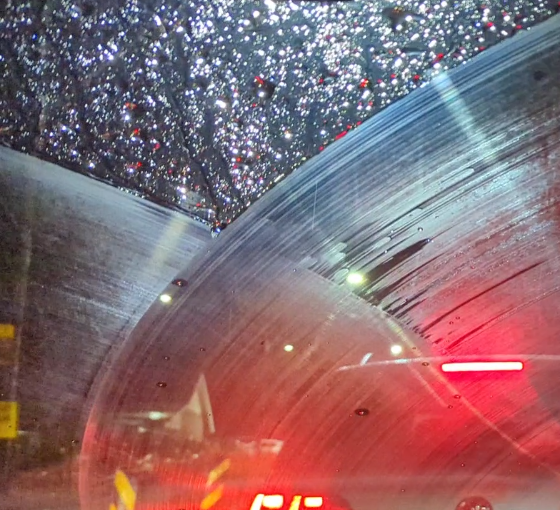
The second major problem undermines the entire purpose of wiper blades: silicone wipers often leave streaks and smears that actually reduce visibility rather than improve it.
The silicone coating that these blades deposit on your windscreen can create problems:
- Greasy film buildup: Over time, the accumulated silicone creates a slick, greasy layer that’s difficult to see through, especially at night when oncoming headlights create glare and halos
- Uneven application: The coating isn’t always uniform, leading to patches of treated and untreated glass that wipe differently
- Contamination sensitivity: Road grime, dust, and pollution stick to the silicone coating, making the smearing worse
- Interference with washer fluid: The hydrophobic coating can cause washer fluid to bead up and roll off before it can effectively clean, leaving you with a smeary mess
Many Australian drivers report that silicone blades work reasonably well for the first few weeks, but then performance deteriorates as the coating builds up. You’re left with a windscreen that looks “clean” when dry but becomes a blurry, streaky nightmare the moment you turn on the wipers.
In heavy rain—common in tropical Queensland, coastal NSW, or during Melbourne’s winter—the smearing can actually create dangerous visibility problems. When you need your wipers to work perfectly, they let you down.
3. Premium Pricing That Isn’t Justified
Silicone wiper blades typically cost 2-3 times more than quality rubber blades. You might pay $40-80 for a pair of silicone blades versus $15-30 for equivalent rubber blades. That’s a significant premium.
The manufacturers justify this premium with longevity claims, but here’s the problem: most Australian drivers don’t keep silicone blades long enough to realise those theoretical savings.
Why? Because the noise and smearing problems become so intolerable that people remove them after a few months and go back to rubber. You’ve paid premium prices for a “superior” product that you can’t stand to use.
Even if you do keep them on for the claimed 18-24 months, you’re dealing with compromised performance (noise and smearing) for most of that period. Is it really worth saving $20-30 over two years if you’re driving around with squeaking, smeary wipers the whole time?
Quality rubber blades with graphite coating, like those from UNIWIPER, might need replacing every 12 months, but they deliver consistent, reliable, quiet performance for that entire period. The total cost difference is minimal, and the user experience is vastly superior.
4. Don’t Actually Last Longer in Australian UV Conditions
One of the key selling points for silicone blades is their supposed UV resistance and extended lifespan. In theory, silicone doesn’t degrade from sun exposure the way rubber can.
However, Australian UV conditions are among the harshest in the world. Our sun intensity regularly exceeds UV index 11-13 during summer, particularly in Queensland and Northern Australia. This extreme UV exposure, combined with dashboard heat that can exceed 70°C, creates an environment that challenges even silicone’s durability claims.
More importantly, blade failure isn’t just about material degradation—it’s about performance degradation. Even if the silicone material itself remains intact, several factors shorten the effective lifespan:
- Edge hardening: Despite remaining flexible, the wiping edge can become harder and less effective over time
- Contamination buildup: Australian conditions—dust, pollution, sea salt, bushfire smoke—contaminate the blade edge, reducing wiping effectiveness
- Frame and connector wear: The blade material might outlast the metal frame, springs, and plastic connectors
- Coating interference: The silicone coating buildup on your windscreen makes the blades less effective over time, even if the blades themselves are fine
In practice, many Australian drivers find that silicone blades need replacing at similar intervals to quality rubber blades—around 12-18 months. The theoretical material longevity doesn’t translate to actual performance longevity.
Modern rubber blade technology has also advanced significantly. Premium rubber blades now incorporate UV inhibitors, graphite coatings, and synthetic rubber compounds that resist degradation. The performance gap between silicone and quality rubber has narrowed considerably, making the premium price even harder to justify.
5. Limited Availability and Fitment Options
Silicone wiper blades remain a niche product, which creates practical problems for Australian drivers:
- Limited retail availability: You won’t find silicone blades at most service stations, auto parts stores, or supermarkets—they’re primarily sold online
- Fewer size and fitment options: Not all vehicle models have compatible silicone blade options available
- Longer wait times: Online ordering means waiting days or weeks, not helpful when your current blades are shot and it’s raining
- No emergency replacements: If a silicone blade fails during a trip, good luck finding a replacement in a regional town
Traditional rubber blades, by contrast, are universally available. Every auto parts store, service station, and many supermarkets stock them. If you need a replacement urgently, you can get one within minutes.
Why Traditional Rubber Blades (With Graphite Coating) Are Better
After examining silicone’s problems, the case for sticking with quality rubber blades becomes clear. Modern rubber wiper technology—particularly blades with graphite coating—delivers superior real-world performance for Australian drivers.
Proven Quiet Operation
Rubber blades with graphite coating glide silently across your windscreen. The graphite acts as a dry lubricant, eliminating the stick-slip friction that causes squeaking. You get consistent, quiet operation from installation through to end-of-life.
Crystal-Clear Wiping Without Smearing
Quality rubber blades deliver streak-free, smear-free wiping. They don’t deposit coatings that build up over time or create visibility problems. What you see is what you get: clean glass, every wipe.
Excellent Value for Money
At half to one-third the price of silicone blades, rubber blades offer outstanding value. Even if you replace them annually, you’re spending less over time while enjoying better performance. There’s no premium price for inferior results.
Optimised for Australian Conditions
Modern rubber blade technology is specifically engineered to handle Australian conditions. UV inhibitors resist our harsh sun, synthetic rubber compounds maintain flexibility across our temperature range, and graphite coatings ensure smooth operation in our varied rainfall patterns.
Universal Availability
Need a replacement? Walk into any auto parts store, service station, or many supermarkets. Rubber blades are available everywhere, in every size, for every vehicle. No waiting, no shipping, no drama.
Consistent Performance Throughout Life
Quality rubber blades perform consistently from installation through to the end of their service life. There’s no performance degradation from coating buildup or contamination issues. When they start to show wear, you replace them—simple.
UNIWIPER’s Proven Rubber Technology vs. Silicone Gimmicks
At UNIWIPER, we’ve watched the silicone wiper trend with professional interest—and healthy scepticism. We’ve tested silicone blades extensively, and we’ve seen the disappointed customer reviews from Australian drivers who fell for the marketing hype.
Our philosophy is straightforward: proven technology that works consistently beats trendy innovations that create more problems than they solve.
What Makes UNIWIPER Different
Premium Rubber Compound: We use advanced synthetic rubber formulations specifically engineered for Australian conditions. Our rubber resists UV degradation, maintains flexibility across temperature extremes, and delivers consistent performance.
Graphite-Infused Edge: Every UNIWIPER blade features a graphite-coated wiping edge that ensures silent, smooth operation. No squeaking, no chattering—just quiet, effective wiping every time.
Precision Engineering: Our blades are manufactured to exacting tolerances, ensuring even pressure distribution across the windscreen for streak-free wiping in all conditions.
Australian-Tested: We don’t rely on European or Asian test data. Our blades are proven in real Australian conditions—from Darwin’s tropical monsoons to Melbourne’s miserable winter drizzle to Perth’s dry heat.
Honest Value: We offer premium performance at fair prices. No marketing gimmicks, no dubious longevity claims, no premium pricing for inferior results. Just reliable wiper blades that do exactly what they’re supposed to do.
The UNIWIPER Guarantee
We stand behind our rubber blade technology because we know it works. Thousands of Australian drivers trust UNIWIPER for their visibility and safety. We’re not chasing trends—we’re delivering proven performance that you can rely on every time it rains.
When you choose UNIWIPER, you’re choosing technology that’s been refined over decades, manufactured to the highest standards, and tested in real-world Australian conditions. No surprises, no disappointments, no squeaking—just clear visibility when you need it most.
Frequently Asked Questions About Silicone vs. Rubber Wipers
Are silicone wiper blades worth the extra money?
For most Australian drivers, no. The premium price isn’t justified when you consider the common problems: terrible squeaking, smearing issues, and performance that often doesn’t outlast quality rubber blades. You’re paying more for an inferior user experience. Quality rubber blades deliver better real-world performance at half the price.
Do silicone wiper blades really last longer?
In theory, yes—silicone material resists UV and temperature degradation better than basic rubber. In practice, the performance degradation (smearing from coating buildup, noise problems) often means drivers replace them at similar intervals to quality rubber blades anyway. The theoretical material longevity doesn’t equal practical performance longevity.
Why do my silicone wiper blades squeak so much?
Silicone has a higher coefficient of friction than rubber, causing stick-slip movement across the glass instead of smooth gliding. This creates the squeaking and chattering sound. It’s worse in light rain or on slightly dirty windscreens. Graphite-coated rubber blades eliminate this problem by reducing friction.
Can I stop silicone wiper blades from smearing?
The smearing is caused by the silicone coating that builds up on your windscreen over time. You can temporarily improve it by thoroughly cleaning your windscreen with glass cleaner or isopropyl alcohol, but the coating will return as you continue using the blades. It’s an inherent characteristic of how silicone blades work, not a fixable defect.
Are silicone blades better in hot Australian weather?
Silicone does maintain flexibility better in extreme heat, but modern synthetic rubber blades with UV inhibitors perform excellently in Australian conditions too. The heat resistance advantage doesn’t outweigh the noise and smearing problems that come with silicone. Quality rubber blades are specifically formulated to handle our harsh UV and temperature conditions.
Do professional detailers recommend silicone wiper blades?
Most professional detailers are wary of silicone blades because of the coating they leave on windscreens. This coating can interfere with proper glass treatments and create visibility problems. Many detailers prefer traditional rubber blades for their predictable performance and lack of coating issues.
Will silicone blades damage my windscreen?
No, silicone blades won’t physically damage your windscreen. However, the coating they deposit can be difficult to fully remove and may interfere with visibility, especially at night. If you decide to switch back to rubber blades, you’ll need to thoroughly clean your windscreen to remove the silicone residue.
Are there any situations where silicone blades are actually better?
Silicone blades might have advantages in very specific scenarios—extreme cold where rubber might stiffen, or for vehicles that sit unused for long periods where rubber degradation is a concern. But for regular Australian driving conditions, these niche benefits don’t justify the everyday problems of noise and smearing that most drivers experience.
What should I look for in quality rubber wiper blades?
Look for blades with graphite coating (for quiet operation), UV inhibitors (for Australian sun resistance), high-quality synthetic rubber compounds, precision manufacturing for even pressure distribution, and a reputable brand with local availability. UNIWIPER blades check all these boxes and are specifically engineered for Australian conditions.
Conclusion: Save Your Money and Sanity—Stick with Quality Rubber
The silicone wiper blade hype is exactly that—hype. While the marketing promises sound appealing, the reality for Australian drivers is disappointing at best and infuriating at worst.
Let’s recap the key problems:
- Unbearable squeaking and noise that will drive you mad on every rainy commute
- Smearing and streaking that actually reduces visibility rather than improving it
- Premium pricing that isn’t justified by real-world performance or longevity
- No real durability advantage in harsh Australian UV conditions
- Limited availability when you need a replacement urgently
Compare this to quality rubber wiper blades with graphite coating: silent operation, crystal-clear wiping, excellent value, proven durability in Australian conditions, and universal availability. It’s not even a close contest.
The wiper blade market is full of gimmicks and marketing hype, but some technologies genuinely work better than others. Silicone might sound like the future, but proven rubber technology delivers superior results in the real world—on real Australian roads, in real Australian weather.
Don’t fall for the hype. Choose proven performance. Choose reliable technology. Choose rubber blades that actually work the way wiper blades should: quietly, effectively, and consistently.
Discover UNIWIPER’s range of premium rubber wiper blades—proven technology that actually works
Your windscreen visibility and your sanity are too important to compromise. Stick with what works.
