
How Often to Replace Wiper Blades in Australia: The Honest Schedule
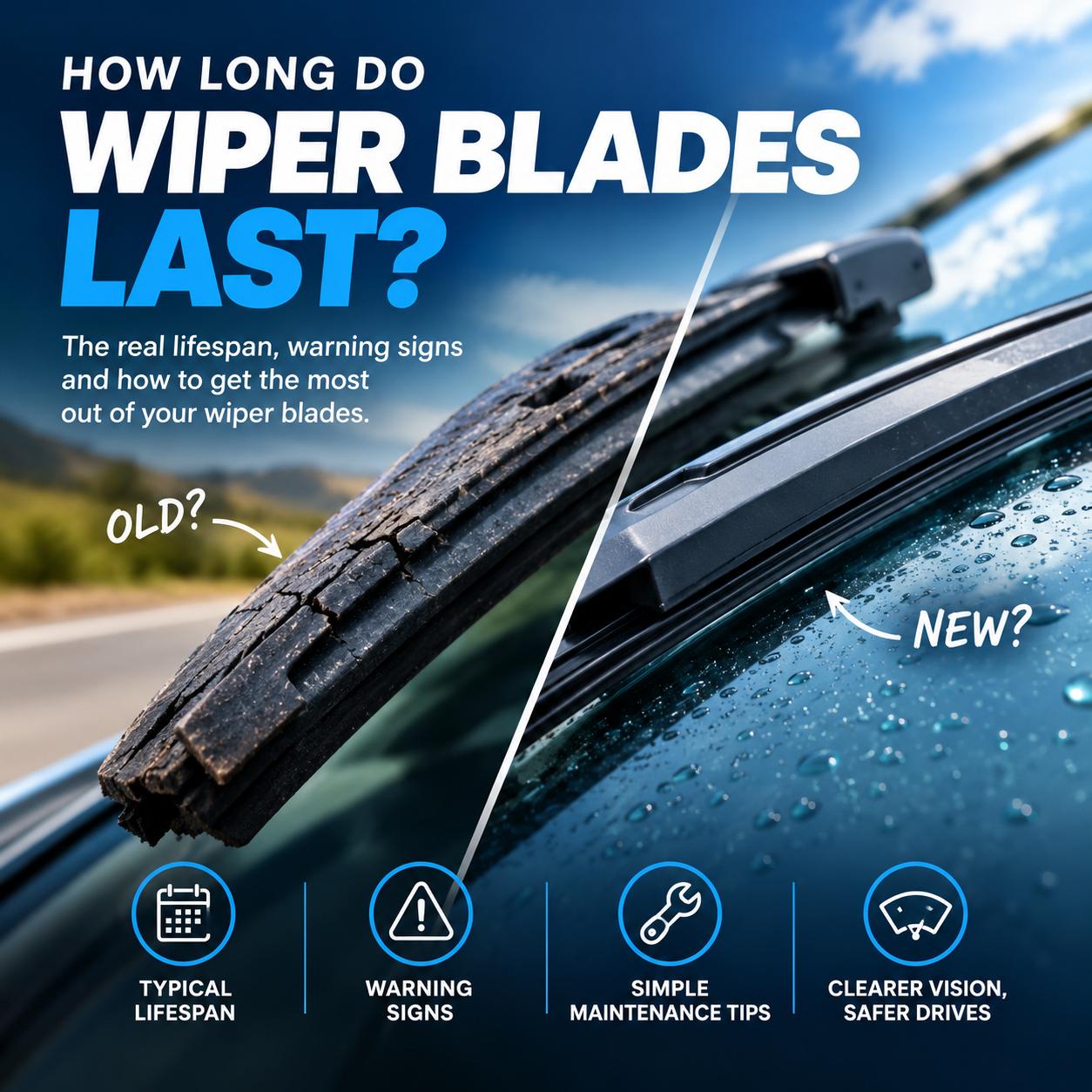
You’ve probably heard conflicting advice about wiper blade replacement. Your mate says every six months, the manufacturer claims 12 to 24 months, and the bloke at the servo reckons “when they stop working.” Meanwhile, your wipers are streaking up the windscreen after only eight months, and you’re wondering who to believe.
Here’s the problem: Most wiper blade guidance comes from manufacturers who test their products in European or North American climates. These testing conditions simply don’t reflect Australian reality. Our relentless UV radiation, extreme heat, coastal salt spray, and long dry spells create a perfect storm that accelerates wiper blade degradation far beyond what happens in moderate climates.
This guide cuts through the confusion with honest, Australia-specific replacement schedules based on real-world conditions. We’ll explain why manufacturer claims fall short down under, provide region-specific timelines, and give you clear warning signs so you know exactly when it’s time to replace your blades.
The bottom line? Plan on replacing your wiper blades every 6 to 12 months in Australia, depending on your climate zone and blade quality. Not the 12 to 24 months you’ll see on the packaging.
The Quick Answer: How Often Should Australians Replace Wiper Blades?
If you just want the numbers without the explanation, here’s your realistic Australian replacement schedule:
- Quality beam blades (like UNIWIPER): 9-12 months
- Budget conventional blades: 6-9 months
- Extreme conditions (tropical north, full sun parking): 6-8 months
- Mild conditions (garaged, temperate climate): 10-14 months
But here’s the important bit: Don’t just follow a calendar. The seven warning signs we’ll cover below are more reliable indicators than any arbitrary timeline. A blade that’s failing at six months needs replacing, even if you planned for twelve. Conversely, well-maintained blades in ideal conditions might safely stretch to fourteen months.
The schedule is your baseline. The warning signs are your action trigger.
Why Manufacturer Claims Don’t Apply in Australia
Manufacturer Testing Standards
Wiper blade manufacturers conduct their lifespan testing in controlled conditions that mirror moderate climates:
- Testing locations: Europe and northern United States
- Average UV index: 2-6 (moderate exposure)
- Temperature range: -10°C to 30°C
- Regular rainfall that keeps rubber supple
- Lower dust and grit exposure
- Minimal coastal salt corrosion
Under these conditions, a quality wiper blade genuinely can last 12 to 24 months. The rubber degrades slowly, the frame stays intact, and the blade maintains consistent contact with the windscreen.
Australian Reality
Now compare those testing conditions to what Australian wiper blades actually face:
UV Radiation (The Silent Killer)
Australia experiences UV index levels of 8 to 14 — the highest in the world. That’s two to three times higher than the moderate climates where wipers are tested. UV radiation breaks down the molecular structure of rubber, causing it to harden, crack, and lose flexibility. Your windscreen surface can reach temperatures exceeding 50°C on a summer day, essentially baking your wiper blades while your car sits in the parking lot.
Temperature Extremes
Australian temperatures range from near-zero in alpine regions during winter to 50°C inland during summer. These extreme swings cause repeated thermal expansion and contraction, accelerating rubber oxidation and causing the material to break down faster than in stable climates.
Prolonged Dry Periods
Unlike Europe’s frequent drizzle, many Australian regions experience long gaps between rainfall. During these dry spells, wiper blade rubber hardens from disuse. When that first rain finally arrives after weeks or months, the hardened blades perform poorly, often requiring several uses before they soften up again — if they soften up at all.
Dust and Grit
Especially in inland and rural areas, airborne dust settles on windscreens and acts like sandpaper on wiper blade edges. Even when your car is parked, this abrasive dust slowly wears down the rubber. After a dust storm or bush driving, the first wiper pass can visibly damage already-weakened blades.
Coastal Salt Corrosion
With 85% of Australians living within 50 kilometers of the coast, salt spray is a reality for most of us. Salt corrodes the metal frames of conventional wiper blades and degrades rubber compounds faster than inland conditions. If you park near the beach regularly, this effect intensifies dramatically.
The Real Numbers
When you account for these Australian-specific factors, the gap between manufacturer claims and real-world performance becomes obvious:
- Manufacturer claim: 12-24 months
- Australian reality for quality beam blades: 9-12 months
- Australian reality for conventional blades: 6-9 months
- Australian reality for budget blades: 4-7 months
That’s a 30 to 50 percent reduction in usable lifespan compared to what the packaging promises. It’s not that the manufacturers are lying — they’re just testing in conditions that don’t exist here.
Replacement Schedule by Australian Climate Zone
Australia’s vast geography means your replacement schedule should vary based on where you live. Here’s a region-specific breakdown:
Tropical North (Darwin, Cairns, Broome)
Replace every: 6-9 months
The tropical north combines extreme year-round UV, heavy monsoon rain during the wet season, high humidity, and intense heat. Your wipers work hard during the wet season, then bake in extreme UV during the dry. This combination is particularly brutal on wiper blade rubber.
Recommended baseline: 8 months
Arid Inland / Outback (Alice Springs, Broken Hill, Kalgoorlie)
Replace every: 6-10 months
Inland Australia delivers extreme heat, intense UV, constant dust abrasion, and dramatic temperature swings between day and night. Even though these regions see less rain (meaning less wiper use), the thermal stress and dust damage compensate for the lighter workload.
Recommended baseline: 8 months
Coastal Cities (Sydney, Brisbane, Melbourne, Perth, Adelaide)
Replace every: 9-12 months
Coastal capital cities experience high UV moderated slightly by ocean proximity, salt corrosion from sea spray, and more frequent rain that keeps wipers in regular use. The combination of salt and UV makes this a challenging environment, though not as extreme as the tropics or outback.
Recommended baseline: 10 months
Temperate Inland (Canberra, Toowoomba, Ballarat, Orange)
Replace every: 10-14 months
Temperate inland regions offer the most moderate Australian conditions. Lower UV during winter months, minimal coastal salt, and less extreme heat make this the easiest environment on wiper blades. However, don’t assume European/US timelines apply — you’re still dealing with Australian UV levels that far exceed overseas norms.
Recommended baseline: 12 months
Factor Adjustments
Adjust your baseline schedule based on these factors:
- Full sun parking daily: Subtract 2 months
- Garaged or covered parking: Add 2 months
- High mileage (30,000+ km/year): Subtract 2 months
- Low mileage (under 5,000 km/year): Add 1 month (but never exceed 14 months)
- Budget blades: Subtract 3 months
- Premium blades: Add 1 month
For example, if you live in Brisbane (10-month baseline) but park in full sun every day, your realistic schedule becomes 8 months. If you live in Canberra (12-month baseline) with garage parking, you might safely stretch to 14 months.
7 Clear Signs It’s Time to Replace Your Wiper Blades
Calendars are useful, but your wipers will tell you when they’re done. Watch for these seven warning signs:
1. Streaking
What it looks like: Visible lines or streaks of water left behind after each wiper pass, creating bands of poor visibility across your windscreen.
Cause: The rubber edge has worn down, hardened from UV exposure, or become contaminated with oils and grime. The blade can no longer maintain a clean seal with the glass.
Action: Try cleaning both the blades and windscreen thoroughly first. If streaking persists after cleaning, replacement is necessary. Don’t wait — streaking reduces visibility, particularly at night when oncoming headlights reflect off the water streaks.
2. Squeaking or Chattering
What it sounds like: Squealing, screeching, or chattering noises during wiper operation, often accompanied by juddering movement.
Cause: UV-hardened rubber that can no longer glide smoothly across the glass surface. The blade catches and releases repeatedly instead of maintaining steady contact.
Action: Clean your windscreen and wiper blades first, as dirt can cause similar noises. If the sound persists, replacement is needed. Note that brand new blades may squeak for the first 10 to 20 wipes — this is a normal break-in period as the rubber edge conforms to your windscreen.
3. Skipping or Juddering
What it looks like: The blade jumps, skips, or judders across the windscreen instead of moving in a smooth arc, leaving irregular cleared patches.
Cause: Severely worn or hardened rubber, frame damage, or loss of spring tension. The blade can no longer maintain consistent pressure and contact with the glass.
Action: Replace immediately. This is a safety issue — juddering wipers provide unpredictable visibility during rain, which is dangerous at highway speeds.
4. Splitting or Tearing
What it looks like: Visible cracks, splits, or tears in the rubber edge when you inspect the blade closely. Often starts small at the edges and spreads.
Cause: UV degradation, age, or physical damage from debris. Once rubber starts splitting, it deteriorates rapidly.
Action: Replace immediately. Torn blades worsen quickly, and the torn edges can scratch your windscreen, turning a $50 blade replacement into a $500-plus windscreen replacement.
5. Bent or Corroded Frame (Conventional Blades)
What it looks like: Visible rust on the metal frame, bent metal arms, or damaged pivot points. More common with conventional framed wipers than modern beam blades.
Cause: Salt corrosion from coastal environments, age, or physical impact damage. Corroded frames lose their ability to distribute pressure evenly across the blade.
Action: Replace immediately. Consider switching to beam blades (like UNIWIPER) that have no exposed metal framework to corrode.
6. Reduced Contact with Windscreen
What it looks like: The blade doesn’t lie flat against the glass anymore. You can see visible gaps between the rubber and windscreen when the wipers are in their resting position.
Cause: Loss of spring tension in beam blades, or frame damage in conventional blades. The blade can no longer conform to your windscreen’s curve.
Action: Replace the blade — this cannot be repaired. Poor contact means poor clearing performance, and the problem will only worsen.
7. “Just Not Working Well” (Trust Your Gut)
What it feels like: Reduced visibility during rain, the sense that your wipers aren’t clearing water as effectively as they used to, or increased driver stress during wet conditions.
Cause: Cumulative degradation that hasn’t yet manifested as an obvious visual defect. Multiple small issues combine to reduce overall performance.
Action: If you’re questioning your wiper performance, it’s probably time to replace them. Don’t wait for complete failure. Your instinct about reduced safety is usually correct.
Don’t Wait for Complete Failure
The Safety Argument
Reduced visibility directly increases accident risk. On Australian highways where speed limits reach 100 to 110 km/h, you need perfect visibility to react quickly to sudden hazards. Getting caught in a sudden downpour with worn wipers is genuinely dangerous — ask anyone who’s experienced it.
Consider the cost comparison:
- Cost of new wiper blades: $40-60
- Cost of an accident: Thousands of dollars, plus potential injury, insurance premium increases, and loss of no-claim discount
From a pure risk-management perspective, premature wiper replacement is cheap insurance.
The Proactive Replacement Philosophy
We recommend replacing wipers at the first sign of degradation rather than waiting for complete failure. Set an annual reminder and don’t try to squeeze extra months out of visibly worn blades.
For budget blades, set a six-month proactive replacement schedule. For quality blades like UNIWIPER, aim for 10 to 12 months. Yes, you might occasionally replace blades with a bit of life left in them — but you’ll never experience the stress and safety risk of degraded wipers in heavy rain.
Calendar-Based vs Condition-Based Replacement
Calendar-based replacement: Replace at a fixed interval regardless of blade condition.
- Pros: You never forget, always optimal performance, no safety compromise
- Cons: May occasionally replace blades with remaining usable life
- Best for: Busy people, safety-focused drivers, those who don’t regularly inspect their vehicles
Condition-based replacement: Replace when you notice performance problems.
- Pros: Maximize blade lifespan, potentially save money
- Cons: Requires regular vigilance, risk of delayed replacement, might miss gradual degradation
- Best for: Hands-on vehicle owners who perform frequent checks
Our recommendation: Hybrid approach
- Set a 12-month calendar reminder as your absolute deadline
- Replace earlier if you notice any of the seven warning signs
- For budget blades, set a 6-month reminder instead
- Inspect blades monthly during routine vehicle checks
How to Extend Wiper Blade Life in Australia
While you can’t defy Australian conditions entirely, these maintenance practices can add weeks or months to your wiper blade lifespan:
Monthly: Clean Your Blades
Take two minutes once a month to wipe down the rubber edge with a damp cloth. This removes accumulated dust, dirt, and grit before it acts like sandpaper on the blade. It’s the single most effective maintenance task for extending blade life — potentially adding two to three months of use.
Park in Shade When Possible
UV radiation is the number one killer of wiper blades in Australia. Garage parking can add several months to blade lifespan. If garage parking isn’t available, use a windscreen sun shade when parking in direct sunlight. Even reducing UV exposure by 50 percent makes a measurable difference.
Don’t Use Wipers Dry
Always spray washer fluid before activating your wipers. Dragging dry blades across a dusty windscreen causes immediate abrasive damage to the rubber edge. This is especially critical after bush driving, dust storms, or any situation where dust has accumulated on your windscreen.
Lift Blades When Parked Long-Term
If parking your vehicle for a week or more, lift the wiper arms away from the windscreen. This prevents the rubber from “setting” into the windscreen curve and reduces UV exposure from light reflecting off the glass. It’s common practice before extended holidays or vehicle storage.
Clean Your Windscreen Regularly
Dirt, grime, and debris on your windscreen act like sandpaper on wiper blades. Keep your glass clean, and your blades will last longer. Remove tree sap, bird droppings, and bug splatter promptly — these contaminants are particularly damaging to rubber.
Use Quality Washer Fluid
Good windscreen washer fluid lubricates wiper blades, reduces friction during operation, and contains rubber conditioning agents. Cheap water-only mixtures provide no lubrication and accelerate blade wear. The extra few dollars for quality washer fluid pays for itself in extended blade life.
Replace with Quality Blades
Quality wiper blades like UNIWIPER last 50 percent longer than budget alternatives. They use better rubber compounds that resist UV degradation and maintain flexibility longer. While the upfront cost is higher, the cost per month of use is actually lower. Learn more about choosing quality blades in our Best Wiper Blades Australia guide.
The Cost of Replacing Too Soon vs Too Late
Replacing Too Soon (Rare Problem)
Cost: You waste $40-60 if blades still had usable life remaining.
Risk: Minimal — just slight overspending.
Reality: Most Australians replace wipers too late, not too soon. This is rarely the actual problem.
Replacing Too Late (Common Problem)
Safety cost: Reduced visibility creates genuine accident risk in rain, particularly at highway speeds or at night.
Windscreen cost: Worn blades with torn edges, exposed metal frames, or embedded grit can scratch your windscreen. Replacing a scratched windscreen costs $300 to $800 or more.
Convenience cost: Getting caught in sudden rain with ineffective wipers creates stressful, potentially dangerous driving conditions.
Stress cost: Anxiety while driving in rain with poor visibility affects your confidence and enjoyment of driving.
Verdict: It’s always better to replace slightly early than slightly late. The safety and convenience benefits far outweigh the minimal cost of occasional premature replacement.
Replacement Schedule Template
Use this template to set calendar reminders for your specific blade type:
For Quality Beam Blades (like UNIWIPER):
- 10 months after installation: Inspect condition closely, check for warning signs
- 12 months after installation: Replace (or earlier if warning signs appeared)
For Budget Conventional Blades:
- 6 months after installation: Inspect condition closely, check for warning signs
- 7 months after installation: Replace (or earlier if warning signs appeared)
Monthly Maintenance Check:
- Visual inspection for cracks, tears, or frame damage
- Clean blades with damp cloth to remove dust and grit
- Test wipers — spray washer fluid and run through full cycle
When You Should Replace Immediately (Don’t Wait)
Replace your wiper blades right away if any of these situations apply:
- ✅ You notice any of the seven warning signs described above
- ✅ Before a long road trip, especially through rural or wet regions
- ✅ Before monsoon season if you live in northern Australia
- ✅ When blades are 12 or more months old, regardless of apparent condition
- ✅ After windscreen replacement (old blades may not match new glass contour)
- ✅ If you can’t remember when you last replaced them (you’re probably overdue)
Frequently Asked Questions
How do I know when my wiper blades need replacing?
Watch for the seven key warning signs: streaking, squeaking, skipping/juddering, visible splitting or tearing, bent or corroded frames, reduced windscreen contact, or general poor performance. Any one of these signs indicates it’s time for replacement. Additionally, follow a calendar schedule — 10-12 months for quality blades, 6-9 months for budget blades — as Australian UV degrades blades even without visible symptoms.
Can wiper blades last 2 years in Australia?
No. While manufacturers often claim 12-24 month lifespans based on European/US testing, Australian conditions reduce actual lifespan by 30-50 percent. Our extreme UV radiation (index 8-14 vs. their 2-6), high temperatures, coastal salt, and dust exposure mean even the best blades typically last only 9-12 months here. Attempting to stretch blades to two years compromises safety and risks windscreen damage.
Do expensive wiper blades last longer?
Yes, significantly. Quality blades like UNIWIPER typically last 50 percent longer than budget alternatives — 10-12 months vs. 6-9 months in Australian conditions. They use superior rubber compounds that resist UV degradation and better frame designs (or frameless beam construction) that distribute pressure more evenly. While the upfront cost is higher, the cost per month of use is actually lower, plus you get better visibility and fewer replacements.
Should I replace both wiper blades at the same time?
Yes, always replace both front wipers simultaneously, even if only one shows obvious wear. Both blades have experienced the same UV exposure, temperature extremes, and usage, so they’re degrading at similar rates. Replacing only one means you’ll need to replace the other soon anyway, and mismatched blades (one old, one new) provide inconsistent clearing performance. The small cost saving isn’t worth the inconvenience.
Do beam blades last longer than conventional blades?
Yes, beam blades generally outlast conventional framed blades in Australian conditions. Beam blades have no exposed metal framework to corrode in coastal salt spray, and their solid construction handles thermal expansion better. They also distribute pressure more evenly across the entire blade length, reducing uneven wear. Expect 10-12 months from quality beam blades vs. 6-9 months from conventional blades in similar conditions.
How often should I replace rear wiper blades?
Replace rear wipers on the same schedule as front wipers — every 9-12 months for quality beam blades. Rear wipers often get neglected because they’re used less frequently, but they suffer the same UV and environmental damage while sitting idle. Many drivers don’t discover their rear wiper has failed until they desperately need it during a heavy downpour. Check and replace proactively.
Can I extend wiper blade life with maintenance?
Yes, regular maintenance can add 2-3 months to blade lifespan. Clean blades monthly with a damp cloth to remove abrasive dust and grit. Park in shade or use a windscreen sun shade to reduce UV exposure. Always use washer fluid before activating wipers — never drag dry blades across dusty glass. Use quality washer fluid with rubber conditioners. These practices won’t overcome Australian conditions entirely, but they meaningfully extend blade life.
What happens if I don’t replace worn wiper blades?
Continuing to use worn blades creates several problems: severely reduced visibility during rain increases accident risk; torn blades with exposed metal can scratch your windscreen (costing $300-800+ to replace); hardened blades may judder violently and damage wiper motors; and you’ll experience significant stress and reduced confidence driving in wet conditions. The safety risk alone makes timely replacement essential — worn wipers are genuinely dangerous at highway speeds in heavy rain.
Ready to Replace Your Wiper Blades?
You’re overdue for replacement if:
- ❌ You can’t remember when you last replaced your wipers
- ❌ You’re noticing streaking, squeaking, or reduced clearing performance
- ❌ Your blades show visible damage, cracks, or wear
- ❌ It’s been more than 12 months since replacement
Choose UNIWIPER for Australian Conditions:
- ✅ Designed specifically for harsh Australian UV and climate
- ✅ Realistic 10-12 month lifespan (not overpromised 24 months)
- ✅ Beam blade technology for longer life and better performance
- ✅ Better value per month of use compared to budget alternatives
- ✅ Easy DIY replacement in just 5 minutes
Learn how to install your new wipers in our How to Replace Wiper Blades guide.
Shop UNIWIPER — Built to Last in Australian Conditions →
Key Takeaways
- Realistic Australian schedule: Plan on 6-12 months, not the manufacturer’s claimed 12-24 months. Australian UV, heat, and environmental factors reduce blade lifespan by 30-50 percent.
- Quality matters: Premium blades like UNIWIPER last 50 percent longer than budget options and provide better visibility throughout their lifespan. The higher upfront cost is offset by fewer replacements.
- Watch for warning signs: Don’t wait for complete failure. Streaking, squeaking, juddering, visible damage, or reduced performance are all signals to replace immediately.
- Climate varies: Adjust your schedule based on location — tropical/outback regions need 6-9 months, coastal cities 9-12 months, temperate inland 10-14 months. Factor in parking conditions and mileage.
- Proactive replacement is safer and cheaper: Replacing slightly early is far better than replacing too late. The safety benefits and avoided windscreen damage costs far exceed the price of new blades.
- UNIWIPER is designed for this: Unlike generic brands tested in European conditions, UNIWIPER is engineered with Australian climate challenges in mind, delivering realistic 10-12 month performance.
Get Your UNIWIPER Blades — 10-12 Month Australian Lifespan →
