The Complete Guide to Marine Wiper Blades for Australian Boat Owners
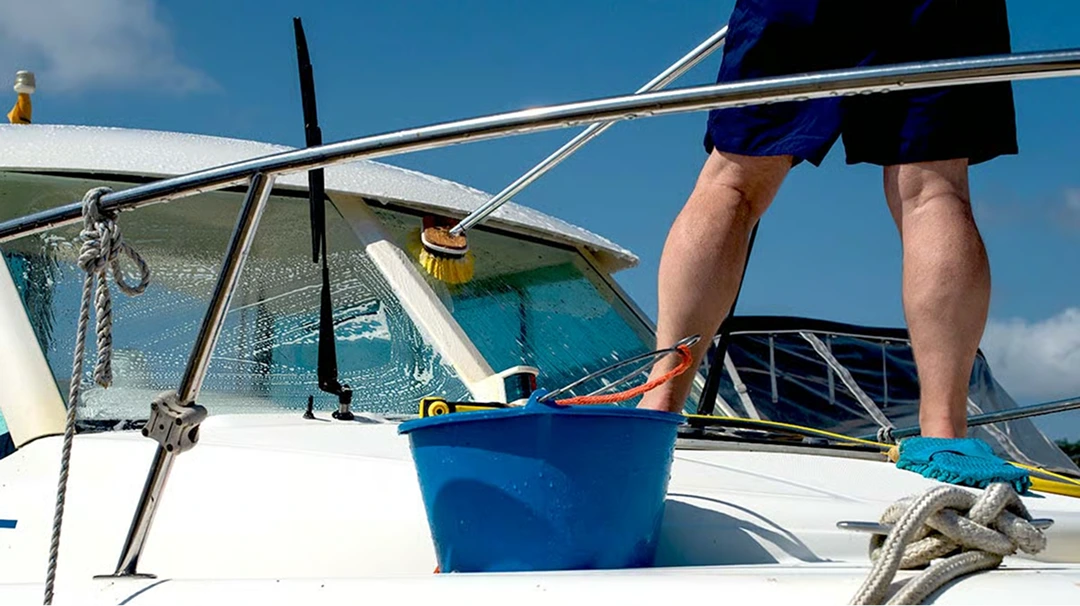
Car wiper blades fail on boats, and they fail fast. Fit a cheap set from the auto shop to your runabout and you can watch the frame rust, the rubber crack and the clip corrode in a single season. That is because a boat windscreen sits in the harshest environment a wiper will ever face: three enemies working together — saltwater, ultraviolet (UV) radiation and galvanic corrosion between dissimilar metals. Marine wiper blades are engineered to survive all three. By the end of this guide you will know exactly how marine wiper blades differ from car wipers, how to size and choose the right set for your boat, how to install them, and how to make them last through an Australian summer.
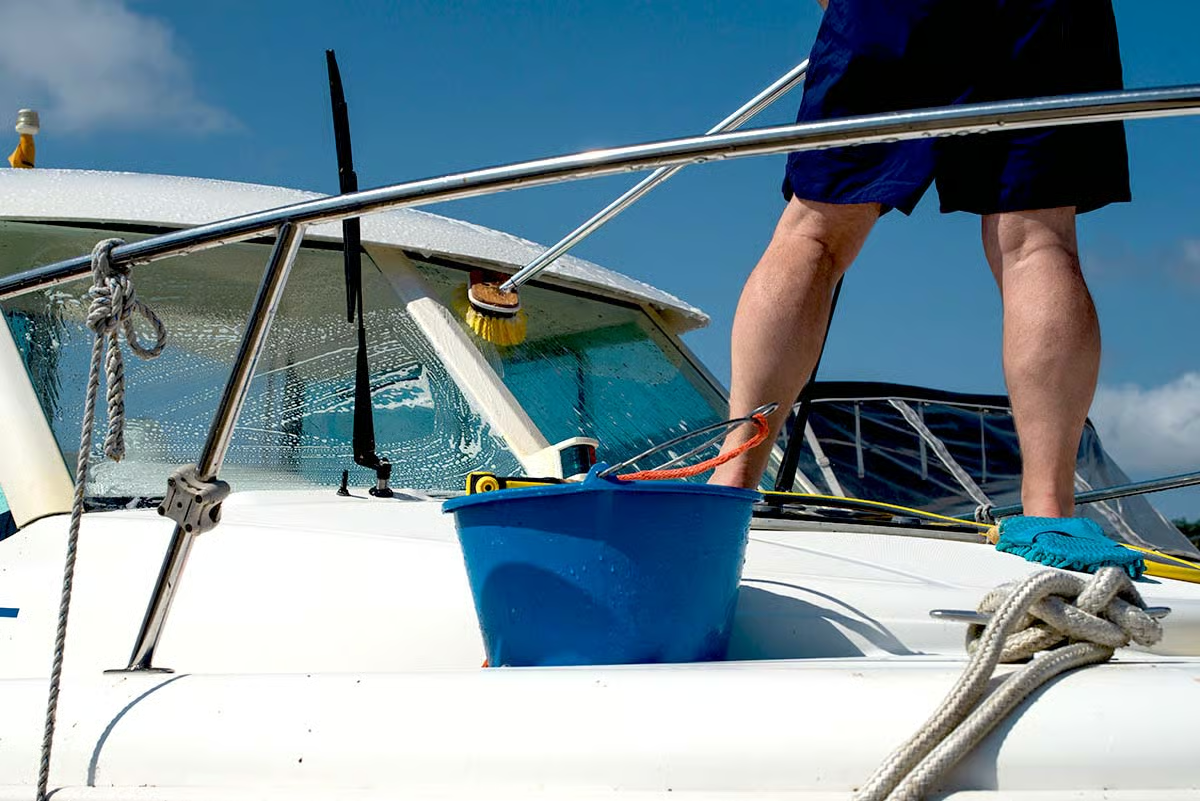
Why Marine Wiper Blades Are Different from Car Wipers
A car wiper sits in a garage overnight and sees mild rain. A boat wiper sits in salt air every day of its life. Salty air corrodes metal roughly ten times faster than ordinary air, so the wiper lives in the worst zone there is for rust.
Most car wiper frames are chrome-plated steel. Chrome plating hides mild steel underneath. Scratch it, soak it in salt and the steel rusts through from inside. Marine wiper blades use 316 stainless steel for the frame, spring and connector, so there is no plating to fail.
The rubber matters too. Natural rubber dries out under UV and goes hard and brittle, which is why a car wiper streaks after an Australian summer. Marine-grade silicone squeegees shrug off UV and salt and stay soft for far longer.
Then there is galvanic corrosion. When two different metals touch in saltwater, they form a tiny battery and the weaker metal eats itself. Most boat wiper arms are aluminium. Clip a car wiper’s steel connector onto an aluminium arm, splash it with seawater, and the arm begins to pit at the contact point. Finally, car-wiper connectors (usually a J-hook) rarely match the bayonet, pin or saddle fittings used on boat arms, so even if you ignore the corrosion, the clip often will not fit.
Types of Marine Wiper Blades Available in Australia
Not every boat wiper looks the same. Three choices matter most when you shop for boat windscreen wipers Australia-wide.
Conventional (framed) blades
A framed blade has a metal spine with pressure points and a replaceable rubber refill. These are the traditional design and are easy to service — you can swap just the rubber. On a marine blade the frame should be 316 stainless.
Beam (flat) blades
A beam blade is a single curved strip with no visible frame. It presses evenly across the whole length, which gives a cleaner sweep on larger curved windscreens. There are fewer joints for salt to attack, so beam-style marine windscreen wipers tend to hold up well on exposed helms.
Silicone vs rubber squeegees
The squeegee is the strip that actually touches the glass. Natural rubber is cheap but hardens quickly under UV and salt. Silicone stays soft, repels water better and typically lasts two to three times longer than natural rubber under the same salt-and-sun exposure. For an Australian boat, silicone is the sensible default.
How to Choose the Right Size Marine Wiper Blade
Boat wipers are measured tip to tip across the blade itself — not along the arm. Pull off the old blade, lay it on a bench and measure in a straight line from one end of the rubber to the other.
As a guide for Australian boats:
- 5–7 metre runabouts and tinnies: 600mm (24″) is the usual fit.
- 7–10 metre cruisers and half-cabins: 800mm (32″) covers most helm windows.
- 10 metre and larger flybridge or small commercial craft: 1000mm (40″) is standard.
Size is only half the job. You also need to match the connector where the blade clips to the arm. On boats you will meet four main types: a bayonet (the blade slots in and twists), a pin (a small rod through a hole), a J-hook (a hook you pass through a slot — rare on marine arms but common on cars), and a saddle or screw mount (two bolts clamp the blade). If you are not sure which one you have, photograph the end of the arm with the old blade removed and compare it to a connector chart before you buy.
Essential Features to Look for in Marine Wiper Blades
Price is not the best filter. These four features decide whether a blade survives an Australian season.
316 stainless steel over 304. Both grades contain about 18% chromium, but 316 adds 2–3% molybdenum. That small amount of molybdenum is what resists “chloride pitting” — the tiny rust holes that saltwater drills into ordinary stainless. 304 stainless is fine for a kitchen sink. For a boat, 316 is the grade you want for the frame, spring and connector.
Marine-grade silicone squeegee. The rubber lip is the wear part. A silicone compound engineered for marine use stays flexible under constant salt spray and tropical sun, where natural rubber goes glassy within months.
UV stabilisation. Any plastic parts (end caps, covers) should be UV stabilised. Without it they chalk and crack within a year on a northern Australian hardtop.
The correct connector adapter supplied in the box. Good marine wiper blades ship with a small pack of adapters — bayonet, pin, saddle — so one blade fits whichever arm the builder specified. If a blade claims to be “universal” but ships with only a J-hook, it is a car blade in disguise.
Marine Wiper Maintenance: Making Your Blades Last Longer
Good blades still need care. The single most useful habit for boat wiper maintenance is a freshwater rinse after every outing. The reason is mechanical, not cosmetic. When seawater dries on the windscreen and on the blade, it leaves microscopic salt crystals. Those crystals are hard and sharp. Every time the wiper runs, it drags its soft rubber lip across them, which abrades the edge like fine sandpaper. The same crystals sit in every joint on the frame and spring, holding moisture and accelerating corrosion. Rinse the salt off while it is still wet and both problems go away.
Beyond the rinse, run a quick check once a month:
- Lift each arm and wipe the blade with a damp cloth — look for black streaks on the rag (that is rubber coming off).
- Press the blade against the glass with a finger; it should spring back firmly.
- Check the spring and clip for white powder or orange rust.
- Flex the rubber. If it feels like a pencil eraser, it is done.
Warning signs that the blade needs replacing: streaking across the glass, chattering or juddering on the downstroke, visible nicks or tears in the lip, and rubber that has gone hard or cracked. Any one of these and it is time for a fresh set of saltwater resistant wiper blades.
Installation Tips for Boat Wiper Blades
Fitting a new blade takes about five minutes once you know the drill.
Tools: usually none — most marine blades click on by hand. A small flat screwdriver helps on saddle-mount arms. A rag protects the glass.
Six-step walkthrough:
- Park the wipers at the bottom of their sweep so the arms are in a comfortable position.
- Lift the arm away from the glass until it locks upright. Lay the rag over the windscreen in case the arm snaps back.
- Identify the connector on the old blade (bayonet, pin, J-hook or saddle). Match it to the adapter on the new blade.
- Release the old blade. On a bayonet, twist and pull. On a pin, lift the clip and slide off. On a saddle, undo the two small bolts.
- Click the new blade on until you hear or feel it lock. Give it a gentle tug to confirm.
- Lower the arm gently back onto the glass. Never let it snap down — a sprung arm can crack a windscreen.
Common mistakes: fitting the blade upside down (the curve should match the glass), forgetting to remove the plastic protector on the squeegee, and over-tightening saddle bolts, which bows the frame and causes streaking from day one.
Top Mistakes Boat Owners Make with Marine Wipers
Most wiper failures on boats trace back to the same handful of errors.
- Fitting car wipers to save a few dollars. You save money today and buy new blades — plus a corroded arm — three months later.
- Skipping the freshwater rinse. Dried salt crystals are the number one killer of boat wiper blades. A thirty-second hose off doubles their life.
- Buying the wrong size. A blade that is too short leaves a dirty strip; one too long drags off the glass and tears its lip.
- Ignoring early warning signs. Streaks and chatter mean the lip is already damaged. Replace blades then, not after they fail in heavy rain offshore.
- Mixing dissimilar metals. A stainless clip on an aluminium arm with no isolation washer forms a galvanic pair — the aluminium pits around the contact. Use the correct adapter and keep both metals clean.
Marine Wiper Blades for Australian Conditions
Australia is not one climate for a boat wiper. The replacement cycle changes by latitude.
Queensland and the Northern Territory sit under the harshest UV in the country. Darwin averages roughly UV Index 11.85 year-round, and summer readings across the tropical north regularly top UV 14. Australian UV is about 10% stronger than equivalent latitudes in the Northern Hemisphere. Combine that with warm salt air every day of the year and tropical boat wipers see the shortest service life — around six months is a realistic plan.
New South Wales, southern WA and coastal SA sit in the middle. Strong summer UV, long seasons on the water, but cooler winters give the rubber a rest. Expect eight to ten months per set.
Victoria and Tasmania have lower UV but constant spray, cold, and occasional frost on the windscreen. Rubber lasts longer here — ten to twelve months is normal — but a brittle, frozen blade dragged across an icy screen in July can tear in one sweep. Lift the arms off the glass before frost sets in.
A rough regional schedule: tropical north — rinse every outing, inspect monthly, replace at six months. Temperate coast — rinse every outing, inspect monthly, replace at nine to ten months. Southern/Tasmanian — rinse every outing, inspect monthly, replace at twelve months, and lift arms off the glass before frost.
How to Choose Marine Wiper Blades from Uniwiper
Uniwiper stocks a focused range of marine wiper blades built for Australian conditions, in the three sizes that cover almost every recreational and small commercial boat on our coast.
- The 24″ / 600mm boat wiper blade suits 5–7 metre runabouts, tinnies and smaller centre consoles.
- The 32″ / 800mm boat wiper blade is the right choice for most 7–10 metre cruisers and half-cabin cruisers.
- The 40″ / 1000mm boat wiper blade covers the big flybridge screens on 10 metre and larger vessels, and most small commercial helms.
- For specialty fitments, connector adapters and the rest of the range, see the complete Uniwiper boat wiper collection.
Each blade is built from marine-grade materials for Australian salt and sun. Measure your current blade tip to tip, confirm the connector on your arm, then pick the matching size.
FAQs About Marine Wiper Blades
Can I use car wiper blades on my boat? You can fit them, but you should not. Car blades use chrome-plated steel frames and J-hook connectors that corrode in salt air and often will not match a marine arm. A clip of the wrong metal on an aluminium boat arm also causes galvanic corrosion.
How often should I replace boat windscreen wipers in Australia? Expect six to twelve months. Tropical Queensland and the Northern Territory sit at the short end because of year-round UV and salt. Victoria and Tasmania sit at the long end. Any streaking, chatter or hardened rubber means replace now, regardless of age.
What’s the difference between a pantograph and a standard wiper arm? A standard (radial) arm has one pivot and sweeps an arc, so the blade travels in a curve. A pantograph has two linked arms that keep the blade parallel to the vertical as it moves, which clears a far larger rectangular area — common on flybridges and commercial helms.
What size wiper blade fits my boat? Measure the current blade tip to tip. As a guide, 5–7m boats take 600mm (24″), 7–10m take 800mm (32″), and 10m+ take 1000mm (40″). Always confirm the connector type too — size alone is not enough.
Why do my boat wipers streak? Three usual causes: the rubber lip is worn or hardened, a salt crust has built up on the edge, or the arm spring has lost tension and the blade is not being pushed firmly enough against the glass. Clean the lip first; if streaking continues, replace the blade; if a new blade still streaks, suspect the arm.
Is 316 stainless really necessary, or is 304 enough? For marine use, 316 is worth the small premium. The extra 2–3% molybdenum in 316 is what stops chloride pitting from salt. 304 will corrode in salt air within a season or two, especially around welds and spring joints.
Conclusion: Clear Vision for Safe Boating
Marine wiper blades do a simple job in a hard place. Three enemies — salt, UV and galvanic corrosion — kill ordinary wipers in months. Three defences beat them: marine-grade materials (316 stainless, silicone squeegee, UV-stable plastics); the right size and connector for your arm; and a disciplined rinse-and-inspect routine. Get those right and you keep a clear view when the weather turns, which is when a windscreen wiper actually matters. When you are ready to upgrade, browse the Uniwiper boat wiper range in 24″, 32″ and 40″ and fit a set built for Australian conditions.