
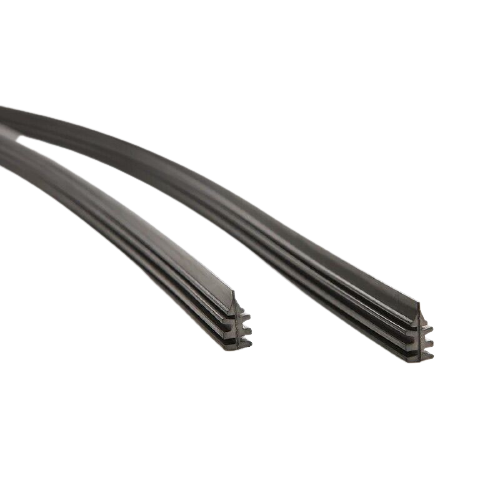
Understanding the Core Materials: It’s More Than Just a “Rubber”
Before judging performance, it’s essential to understand what these blades are made of and how their fundamental composition dictates their behaviour.
Traditional Rubber Blades (Natural & Synthetic)
The vast majority of “rubber” blades on the market today are made from synthetic rubber compounds, often a blend of ethylene propylene diene monomer (EPDM) and other additives. Their key characteristic is flexibility and excellent initial wipe quality. However, the material is inherently porous and has molecular chains that are highly susceptible to environmental attack. They require a coating of graphite or sometimes a thin layer of silicone to reduce friction, which wears away over time.
Advanced Silicone Blades (Polymer Power)
Silicone blades are crafted from a synthetic polymer (polysiloxane) that offers a fundamentally different structure. The silicon-oxygen backbone is incredibly stable and non-porous. High-quality silicone blades often integrate the silicone throughout the entire wiping edge, not just as a coating. This gives them unique self-lubricating properties and a much higher resistance to the elements that traditionally degrade rubber.
The Ultimate Australian Test: How Each Material Fares
Australia doesn’t just have weather; it has weather with an attitude. Let’s break down how each blade type handles the specific challenges of the Aussie environment.
1. The Relentless Sun and UV Exposure
The Challenge: Australia has some of the highest levels of solar UV radiation on the planet. This is public enemy number one for traditional materials, causing oxidation, cracking, and hardening—a process known as “perishing.”
Rubber Performance: Poor. UV radiation breaks down the chemical bonds in rubber, causing it to lose elasticity, become brittle, and develop a permanent curve (set) that ruins contact with the windscreen. Even in a parked car, degradation is constant.
Silicone Performance: Exceptional. Silicone’s molecular structure is highly UV-resistant. It doesn’t oxidise or perish like rubber. A 2026 study by the Australian Automotive Aftermarket Association (AAAA) found silicone blades retained over 90% of their flexibility after accelerated UV testing that completely destroyed rubber equivalents.
Verdict: Silicone wins decisively. For drivers in Perth, Brisbane, or the Northern Territory, this is arguably the most significant factor.
2. Torrential Rain and Monsoon Conditions
The Challenge: From tropical monsoons in the north to cold fronts in the south, effective water clearance and prevention of streaking are non-negotiable for safety.
Rubber Performance: Good, but declining. When new, a quality rubber blade provides a clean, chatter-free wipe. However, as the edge wears and hardens, it begins to streak and leave thin films of water. Its performance degrades steadily over time.
Silicone Performance: Excellent and consistent. Silicone’s low surface tension helps water bead and roll off the windscreen more easily. Furthermore, as the blade sweeps, microscopic amounts of silicone transfer to the glass, creating a hydrophobic coating that causes rain to bead up and blow away even before the wipers are engaged. This “invisible wax” effect improves visibility between wipes.
Verdict: Silicone wins for long-term consistency and added hydrophobic benefit, crucial for highway driving in heavy rain.
3. Dust, Pollen, and Outback Grime
The Challenge: Australian roads are often coated in a fine layer of dust, pollen, or gritty grime. Wipers must clear this without dragging it across the glass and causing scratches.
Rubber Performance: Moderate risk. Dry rubber can be abrasive. Using wipers on a dry, dusty windscreen is a surefire way to accelerate wear on both the blade and the glass, and can create nasty squeaking.
Silicone Performance: Superior. Silicone is inherently smoother and more lubricious. It generates less friction when passing over fine particles, reducing the risk of scratching. Its durability also means the wiping edge stays smoother for longer, preventing the jagged edges that can mar glass.
Verdict: Silicone is the safer choice for drivers in dusty regions or those who frequently encounter bushfire haze or outback roads.
4. Temperature Extremes: From Scorching Heat to Chilly Mornings
The Challenge: A windscreen in Central Australia can hit 70°C+, while a winter morning in Tasmania can bring frost and ice.
Rubber Performance: Variable. Rubber softens in extreme heat, which can increase wear rate and cause “wind-lift” at high speeds. In cold, it stiffens, leading to a choppy wipe until it warms up.
Silicone Performance: Highly stable. Silicone has a much wider operational temperature range (-60°C to +220°C). It remains flexible in frost and doesn’t become overly soft in blistering heat, maintaining consistent pressure and wipe quality.
Verdict: Silicone offers more predictable performance across Australia’s vast thermal range.
The 2026 Cost-Benefit Analysis: Upfront Price vs. Long-Term Value
Initial Purchase Price
Rubber Blades: The clear winner on upfront cost. You can purchase a set of quality rubber blades for a fraction of the price of silicone. They remain the budget-friendly, easy-to-find option at every service station and auto shop.
Silicone Blades: Command a premium. In 2026, a set of top-tier silicone blades can cost 2 to 3 times more than a premium rubber set. This is the biggest barrier to entry for most consumers.
Lifespan and Long-Term Value
Rubber Blades: Typically last 6 to 12 months in harsh Australian conditions. The UV and heat ensure they are a consumable item requiring regular replacement.
Silicone Blades: The game-changer. Multiple long-term tests and user reports in 2026 confirm that high-quality silicone blades routinely last 2 to 5 years. Their resistance to environmental decay means they don’t age out—they wear out, which takes significantly longer.
The Math: While you might pay $80 for a set of silicone blades versus $40 for rubber, if the silicone lasts four times as long, you’re saving money, time, and hassle on replacements. You’re also ensuring optimal performance for a much longer period.
Making the Right Choice for Your 2026 Australian Drive
When to Choose Silicone Wiper Blades:
- You Live in a High-UV Region: Northern Australia, QLD, NT, WA, and inland areas.
- You Prioritise “Fit and Forget” Maintenance: You want the longest possible service life and are willing to pay more upfront.
- You Frequently Drive in Heavy Rain: The hydrophobic effect is a valuable safety bonus.
- Your Vehicle is Parked Outdoors 24/7: The blades are constantly exposed to the elements.
- You Want Peak Performance for Long Highway Trips: Consistency and reliability are key.
When Rubber Blades Might Still Suffice:
- Budget is the Primary Constraint: The initial outlay is the most important factor.
- You Drive an Older or Rarely Used Vehicle: A weekend car or a soon-to-be-sold vehicle.
- You Have a Covered Garage: If your car is shielded from direct sun and rain most of the time, rubber’s lifespan extends considerably.
- You Don’t Mind Regular Replacements: You’re diligent with 6-12 monthly maintenance checks.
Pro Tips for Installation and Care in 2026
Regardless of your choice, proper care maximises performance and lifespan.
- Clean Your Blades Monthly: Wipe the wiping edge with isopropyl alcohol on a cloth to remove grease, grime, and insect residue. This is especially important for silicone blades to maintain their hydrophobic transfer.
- Clean Your Windscreen Thoroughly: Use a dedicated automotive glass cleaner and a clay bar to remove bonded contaminants. A clean windscreen reduces friction and wear.
- Never Use the Wipers on a Dry or Gritty Windscreen: Always use the washer fluid to lubricate the sweep.
- Lift Blades in Hail or Extreme Heat: If parked for extended periods in severe conditions, lifting the arms off the glass prevents the blade from bonding or deforming.
- Buy Quality: Not all silicone blades are created equal. In 2026, stick with reputable brands that offer warranties and have proven reviews in the Australian market.
Conclusion: The Clear Winner for the Future of Australian Driving
As we navigate the roads of 2026, the evidence points to a decisive shift. While traditional rubber wiper blades remain a viable, low-cost option for specific, sheltered use cases, advanced silicone wiper blades are objectively superior for the vast majority of Australian driving conditions. Their unparalleled resistance to UV degradation, exceptional longevity, consistent performance in all weather, and added safety benefit of windshield hydrophobicity make them a smart, long-term investment for any driver.
The initial price premium is just that—initial. When viewed through the lens of total cost of ownership, safety consistency, and the sheer convenience of not having to change blades every wet season, silicone emerges as the rational choice. For Australian motorists facing another decade of sun, storms, and dust, upgrading to silicone blades isn’t just a purchase; it’s an upgrade to a clearer, safer, and more reliable view of the road ahead. Your next set of wipers shouldn’t just be a replacement part; they should be the last set you think about buying for years to come.
